Word Explanation
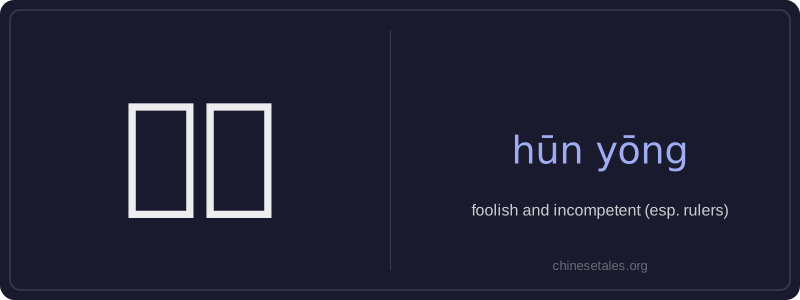
昏庸 (hūn yōng) is an adjective describing someone—especially a ruler or leader—who is both foolish and incompetent, lacking sound judgment, moral clarity, and administrative ability. The character 昏 (hūn) literally means 'dark', 'dull', or 'confused', evoking mental obscurity; 庸 (yōng) means 'mediocre', 'inept', or 'unremarkable', often implying a lack of talent or virtue. Together, they form a compound that strongly conveys moral and intellectual failure in positions of authority.
This term carries heavy negative connotation and is almost exclusively used in historical, literary, or critical contexts—not for casual description of ordinary people. It frequently appears in classical texts, historical dramas, and political commentary to condemn corrupt or ineffectual leadership. While technically applicable to any person, its usage is stylistically elevated and rarely used in modern spoken Chinese except for rhetorical or ironic effect.
Example Sentences
Related Words
国语
‘Guó yǔ’ literally means 'national language'—
无论谁
‘无论谁’ (wú lùn shéi) is a pronoun meaning
不对
不对 (bù duì) literally combines 不 (bù), meani
外语
‘外语’ literally means ‘outside language’ —
我的
我的 (wǒ de) is a possessive pronoun meaning 'my'
违规
违规 (wéi guī) literally means 'to violate rules
亲笔
‘亲笔’ literally means ‘one’s own hand’—comb
面条
‘面条’ (miàn tiáo) literally means ‘flour str