Word Explanation
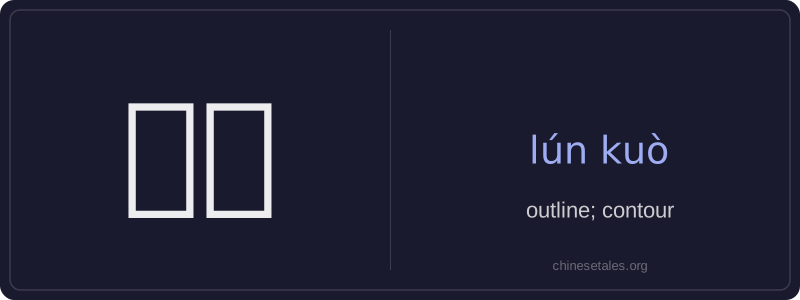
轮廓 (lún kuò) literally combines 轮 (lún), meaning 'wheel' or 'cycle', and 廓 (kuò), meaning 'boundary' or 'outline'. Though the individual characters suggest circularity and enclosure, together they form a standard noun meaning 'outline' or 'contour' — the outer shape or defining edge of an object, person, landscape, or idea. It emphasizes the visible boundary that gives something its recognizable form.
This word is commonly used in visual, artistic, and descriptive contexts — for example, when sketching, describing facial features, mapping terrain, or even characterizing abstract concepts like 'the outline of a plan'. It appears frequently in art criticism, geography, anatomy, and everyday description of physical appearance. Unlike simpler words like 形状 (xíngzhuàng, 'shape'), 轮廓 focuses specifically on the outermost line or silhouette, not internal structure or proportions.
Example Sentences
Related Words
国语
‘Guó yǔ’ literally means 'national language'—
无论谁
‘无论谁’ (wú lùn shéi) is a pronoun meaning
不对
不对 (bù duì) literally combines 不 (bù), meani
外语
‘外语’ literally means ‘outside language’ —
我的
我的 (wǒ de) is a possessive pronoun meaning 'my'
违规
违规 (wéi guī) literally means 'to violate rules
亲笔
‘亲笔’ literally means ‘one’s own hand’—comb
面条
‘面条’ (miàn tiáo) literally means ‘flour str