Word Explanation
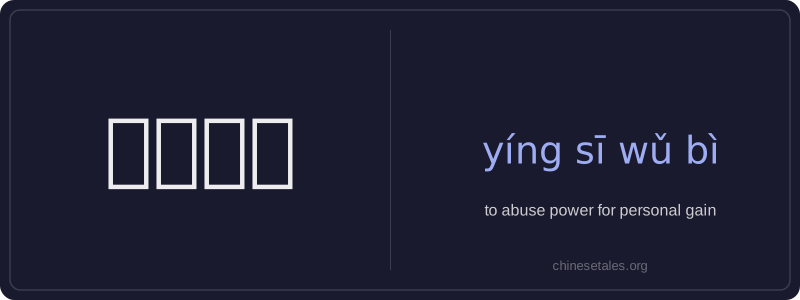
营私舞弊 is a formal, four-character idiom meaning 'to abuse power or authority for personal gain' — often involving corruption, favoritism, or dishonest manipulation of systems or procedures. Literally, 营 (yíng) means 'to manage or pursue', 私 (sī) means 'private interest or self-interest', 舞 (wǔ) evokes 'swaying or manipulating' (as in 'dance'), and 弊 (bì) means 'fraud, deception, or malpractice'. Together, they vividly depict the act of twisting official duties to serve one’s own benefit.
This term is commonly used in legal, administrative, educational, or corporate contexts — especially when describing violations of integrity, such as cheating on exams, rigging bids, or accepting bribes. It carries strong negative connotation and implies deliberate, unethical conduct. While it functions grammatically as both a noun ('an act of corruption') and a verb ('to engage in corruption'), it almost always appears in written or formal spoken Chinese, not casual conversation.
Example Sentences
Related Words
国语
‘Guó yǔ’ literally means 'national language'—
无论谁
‘无论谁’ (wú lùn shéi) is a pronoun meaning
不对
不对 (bù duì) literally combines 不 (bù), meani
外语
‘外语’ literally means ‘outside language’ —
我的
我的 (wǒ de) is a possessive pronoun meaning 'my'
违规
违规 (wéi guī) literally means 'to violate rules
亲笔
‘亲笔’ literally means ‘one’s own hand’—comb
面条
‘面条’ (miàn tiáo) literally means ‘flour str