Word Explanation
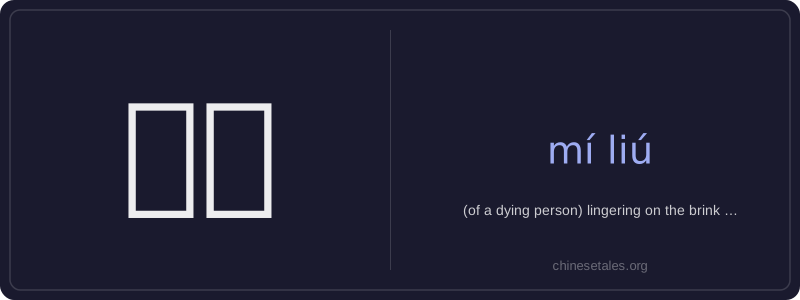
‘弥留’ is a formal, literary noun referring specifically to the final moments before death — when a person is critically ill and hovering between life and death, often unconscious or barely responsive. The character 弥 (mí) means 'to fill completely' or 'to spread widely', suggesting something all-encompassing and inescapable; 留 (liú) means 'to stay' or 'to remain'. Together, they evoke the idea of being utterly trapped in a lingering, suspended state — not yet gone, but no longer truly present in ordinary life.
This term appears almost exclusively in solemn, written contexts: obituaries, medical reports, literature, or respectful speech about someone nearing death. It carries deep emotional weight and conveys dignity and gravity; it is never used casually or humorously. Unlike colloquial terms like ‘快不行了’ (about to go), 弥留 emphasizes quiet inevitability and profound stillness, often implying that loved ones are gathering for a final farewell.
Example Sentences
Related Words
国语
‘Guó yǔ’ literally means 'national language'—
无论谁
‘无论谁’ (wú lùn shéi) is a pronoun meaning
不对
不对 (bù duì) literally combines 不 (bù), meani
外语
‘外语’ literally means ‘outside language’ —
我的
我的 (wǒ de) is a possessive pronoun meaning 'my'
亲笔
‘亲笔’ literally means ‘one’s own hand’—comb
违规
违规 (wéi guī) literally means 'to violate rules
面条
‘面条’ (miàn tiáo) literally means ‘flour str