Word Explanation
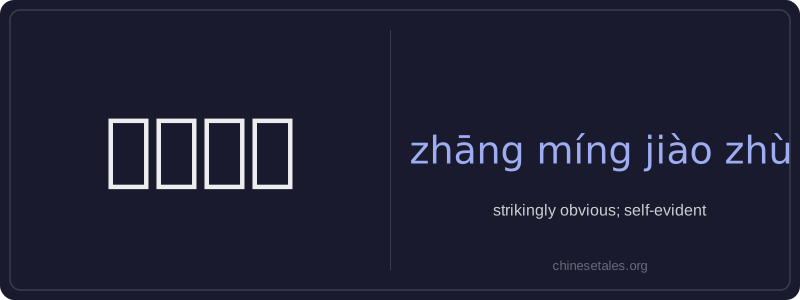
彰明较著 is a formal, literary adjective meaning 'strikingly obvious' or 'self-evident'. It emphasizes clarity so strong that no explanation is needed — the truth or fact stands out unmistakably. The four characters work together: 彰 (to make evident), 明 (clear, bright), 较 (to compare, here implying contrast that highlights difference), and 著 (conspicuous, prominent). Together, they reinforce the idea of something so clear it’s immediately apparent to all.
This phrase is commonly used in written Chinese — essays, news reports, legal documents, or formal speeches — to underscore undeniable evidence, outcomes, or consequences. It carries a tone of authority and objectivity, often describing facts, effects, or results that are beyond dispute. While grammatically an adjective, it typically modifies nouns like 'fact', 'evidence', 'result', or 'difference', and frequently appears after a subject or in predicate position with 是 or 为.
Example Sentences
Related Words
国语
‘Guó yǔ’ literally means 'national language'—
无论谁
‘无论谁’ (wú lùn shéi) is a pronoun meaning
不对
不对 (bù duì) literally combines 不 (bù), meani
外语
‘外语’ literally means ‘outside language’ —
我的
我的 (wǒ de) is a possessive pronoun meaning 'my'
亲笔
‘亲笔’ literally means ‘one’s own hand’—comb
违规
违规 (wéi guī) literally means 'to violate rules
面条
‘面条’ (miàn tiáo) literally means ‘flour str