Word Explanation
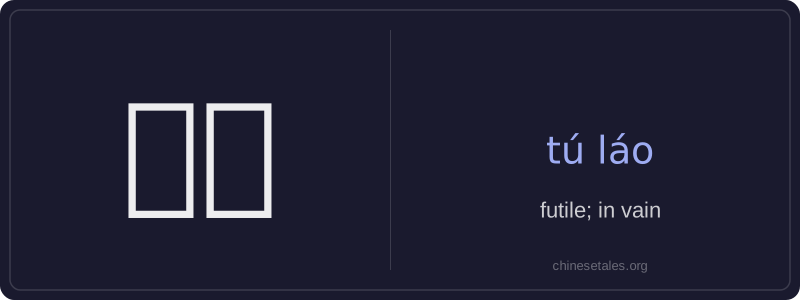
‘徒劳’ (tú láo) is an adjective meaning ‘futile’ or ‘in vain’, describing efforts that produce no useful result. The character 徒 (tú) means ‘in vain’ or ‘empty’, while 劳 (láo) means ‘labor’ or ‘effort’. Together, they literally convey ‘empty effort’ — effort that yields nothing. It emphasizes the futility and pointlessness of an action, often carrying a tone of disappointment or resignation.
This word is commonly used in formal writing, news reports, and serious speech — less frequent in casual conversation. It often modifies nouns like ‘努力’ (effort), ‘尝试’ (attempt), or ‘挣扎’ (struggle), and frequently appears with verbs such as ‘是’ (is), ‘显得’ (appears), or ‘归于’ (ends up). It can also stand alone as a predicate adjective: ‘这一切都是徒劳’ (All this is futile). Unlike colloquial alternatives like 白费劲, 徒劳 sounds more literary and weighty.
Example Sentences
Related Words
国语
‘Guó yǔ’ literally means 'national language'—
无论谁
‘无论谁’ (wú lùn shéi) is a pronoun meaning
不对
不对 (bù duì) literally combines 不 (bù), meani
外语
‘外语’ literally means ‘outside language’ —
我的
我的 (wǒ de) is a possessive pronoun meaning 'my'
亲笔
‘亲笔’ literally means ‘one’s own hand’—comb
违规
违规 (wéi guī) literally means 'to violate rules
面条
‘面条’ (miàn tiáo) literally means ‘flour str