Word Explanation
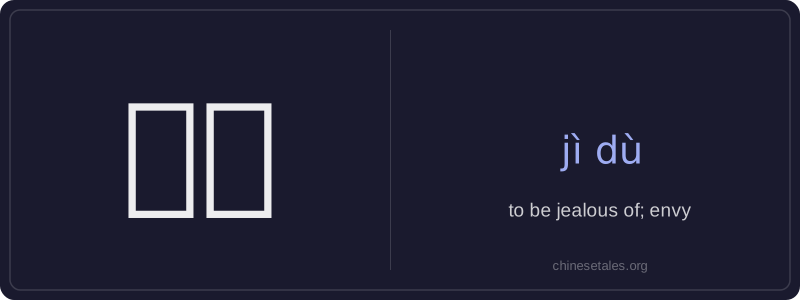
忌妒 (jì dù) is a verb meaning 'to be jealous of' or 'to envy' — specifically, to feel resentment or ill will toward someone because of their advantages, such as success, possessions, talents, or relationships. The character 忌 (jì) means 'to avoid' or 'to fear', often implying aversion or taboo; 妒 (dù) means 'to be envious' or 'to begrudge'. Together, they form a compound that emphasizes the negative, emotionally charged aspect of jealousy — not just mild admiration, but discomfort or hostility arising from comparison.
This word is commonly used in written and formal spoken Chinese, especially when describing interpersonal tension, social competition, or moral judgment. It carries a stronger, more critical connotation than the neutral term 嫉妒 (jí dù), and is often associated with pettiness, insecurity, or harmful behavior. While it can appear in everyday conversation, it’s more frequent in literature, news reports, or psychological discussions about toxic emotions.
Example Sentences
Related Words
国语
‘Guó yǔ’ literally means 'national language'—
无论谁
‘无论谁’ (wú lùn shéi) is a pronoun meaning
不对
不对 (bù duì) literally combines 不 (bù), meani
外语
‘外语’ literally means ‘outside language’ —
我的
我的 (wǒ de) is a possessive pronoun meaning 'my'
亲笔
‘亲笔’ literally means ‘one’s own hand’—comb
违规
违规 (wéi guī) literally means 'to violate rules
面条
‘面条’ (miàn tiáo) literally means ‘flour str