Word Explanation
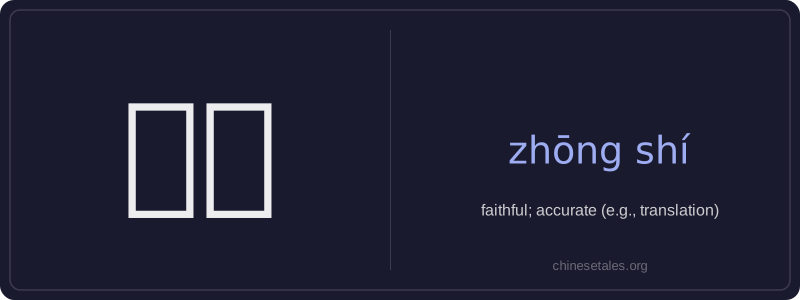
忠 (zhōng) means 'loyal' or 'devoted', often implying deep commitment to a person, cause, or principle. 实 (shí) means 'true', 'real', or 'solid', conveying authenticity and factual accuracy. Together, 忠实 (zhōng shí) describes unwavering loyalty — such as to a friend, leader, or belief — or strict fidelity to an original source, especially in translation or representation. It carries a formal, respectful tone and is commonly used in written Chinese and serious spoken contexts.
The word emphasizes consistency between inner conviction and outward action. In interpersonal contexts, it suggests reliability and moral integrity; in descriptive or technical usage (e.g., 忠实的翻译), it stresses precision and absence of distortion. Unlike casual synonyms like 可靠 (kěkào, 'reliable'), 忠实 implies deeper ethical or ideological alignment, not just functional dependability.
Example Sentences
Related Words
国语
‘Guó yǔ’ literally means 'national language'—
无论谁
‘无论谁’ (wú lùn shéi) is a pronoun meaning
不对
不对 (bù duì) literally combines 不 (bù), meani
外语
‘外语’ literally means ‘outside language’ —
我的
我的 (wǒ de) is a possessive pronoun meaning 'my'
亲笔
‘亲笔’ literally means ‘one’s own hand’—comb
违规
违规 (wéi guī) literally means 'to violate rules
面条
‘面条’ (miàn tiáo) literally means ‘flour str