Word Explanation
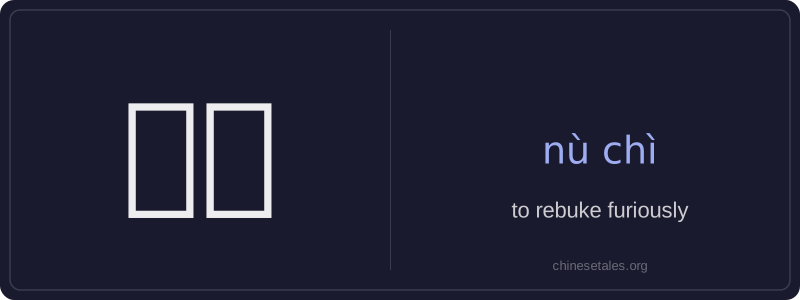
怒斥 is a compound verb meaning 'to rebuke furiously' or 'to scold harshly with visible anger.' It combines 怒 (nù), meaning 'anger' or 'fury,' and 斥 (chì), meaning 'to rebuke,' 'to reprimand,' or 'to denounce.' Together, they intensify the emotional weight: this is not a calm correction but an outburst fueled by indignation, often involving raised voice, stern tone, and strong disapproval.
The word is commonly used in formal writing, news reports, and literary contexts to describe authoritative or emotionally charged reprimands — for example, by teachers, parents, officials, or public figures. It carries a serious, somewhat stern register and is rarely used in light or humorous situations. While grammatically it functions as a transitive verb (requiring an object), it’s often followed by a clause or quotation showing what was said during the rebuke.
Example Sentences
Related Words
国语
‘Guó yǔ’ literally means 'national language'—
无论谁
‘无论谁’ (wú lùn shéi) is a pronoun meaning
不对
不对 (bù duì) literally combines 不 (bù), meani
外语
‘外语’ literally means ‘outside language’ —
我的
我的 (wǒ de) is a possessive pronoun meaning 'my'
亲笔
‘亲笔’ literally means ‘one’s own hand’—comb
违规
违规 (wéi guī) literally means 'to violate rules
面条
‘面条’ (miàn tiáo) literally means ‘flour str