Word Explanation
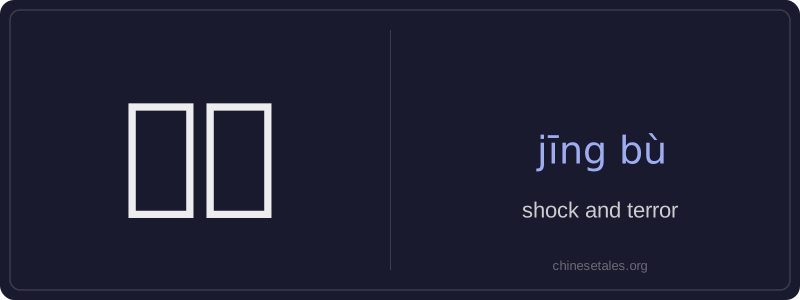
惊怖 is a compound noun meaning 'shock and terror'—a sudden, overwhelming blend of fear and astonishment. The first character 惊 (jīng) conveys startled surprise, often triggered by something unexpected or alarming; the second character 怖 (bù) adds deep dread or horror, suggesting visceral, paralyzing fear. Together, they form a literary and somewhat formal term that emphasizes both the mental jolt and the emotional paralysis of extreme fright—not mere anxiety or nervousness, but a profound, often physical reaction to danger or the uncanny.
This word appears frequently in written Chinese: historical accounts, classical literature, news reports of disasters or attacks, and psychological descriptions. It’s rarely used in casual speech, where simpler terms like 害怕 (hài pà) or 吓了一跳 (xià le yì tiào) are preferred. 惊怖 carries gravity and intensity, often implying an immediate, involuntary response—like witnessing violence, encountering a wild predator, or hearing devastating news.
Example Sentences
Related Words
国语
‘Guó yǔ’ literally means 'national language'—
无论谁
‘无论谁’ (wú lùn shéi) is a pronoun meaning
不对
不对 (bù duì) literally combines 不 (bù), meani
外语
‘外语’ literally means ‘outside language’ —
我的
我的 (wǒ de) is a possessive pronoun meaning 'my'
亲笔
‘亲笔’ literally means ‘one’s own hand’—comb
违规
违规 (wéi guī) literally means 'to violate rules
面条
‘面条’ (miàn tiáo) literally means ‘flour str