Word Explanation
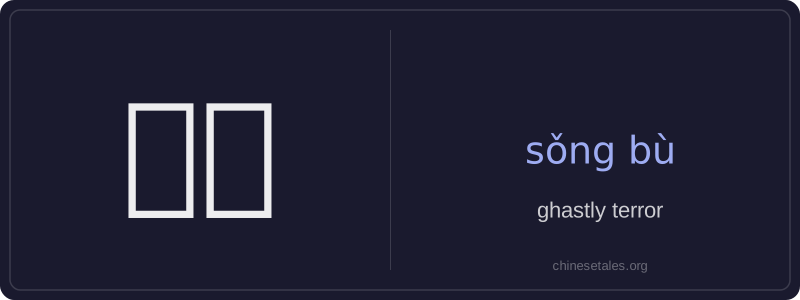
"Sǒng bù" is a literary, formal noun meaning 'ghastly terror' — a deep, chilling fear that stirs the hair on one’s neck and freezes the blood. It combines two characters with overlapping but distinct connotations: 悚 (sǒng) means 'to shudder' or 'to be startled deeply', often implying a physical reaction to dread; and 怖 (bù) means 'fear' or 'dread', emphasizing psychological alarm or horror. Together, they intensify each other, creating a compound that evokes visceral, almost supernatural fright — far stronger than everyday words like 害怕 (hàipà) or 恐惧 (kǒngjù).
This word appears primarily in written Chinese: classical poetry, modern fiction, film reviews, or dramatic narration. It rarely occurs in casual speech or daily conversation, where simpler terms are preferred. Its tone is solemn and heightened, often describing reactions to eerie scenes, uncanny events, or existential threats — such as an abandoned mansion at midnight or a sudden revelation of danger.
Example Sentences
Related Words
国语
‘Guó yǔ’ literally means 'national language'—
无论谁
‘无论谁’ (wú lùn shéi) is a pronoun meaning
不对
不对 (bù duì) literally combines 不 (bù), meani
外语
‘外语’ literally means ‘outside language’ —
我的
我的 (wǒ de) is a possessive pronoun meaning 'my'
亲笔
‘亲笔’ literally means ‘one’s own hand’—comb
违规
违规 (wéi guī) literally means 'to violate rules
面条
‘面条’ (miàn tiáo) literally means ‘flour str