Word Explanation
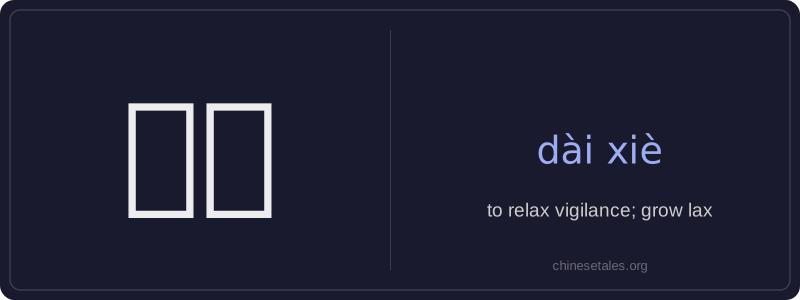
怠懈 is a formal, literary verb meaning 'to relax vigilance' or 'to grow lax'—especially in duty, discipline, or effort. Though composed of two characters (怠 and 懈), both carrying overlapping senses of slackness and negligence, the compound functions as a single unit and is rarely split. 怠 emphasizes laziness or neglect due to indifference; 懈 stresses weakening resolve or letting down one’s guard. Together, they intensify the idea of declining diligence over time, often implying moral or professional responsibility.
This word appears frequently in admonitory contexts—such as speeches by leaders, educational texts, or official notices—warning against complacency in long-term tasks like study, governance, or safety management. It carries a mild negative connotation and is seldom used in casual speech. Native speakers typically reserve it for written or solemn spoken registers, especially when urging sustained attention or warning of consequences from diminished effort.
Example Sentences
Related Words
国语
‘Guó yǔ’ literally means 'national language'—
无论谁
‘无论谁’ (wú lùn shéi) is a pronoun meaning
不对
不对 (bù duì) literally combines 不 (bù), meani
外语
‘外语’ literally means ‘outside language’ —
我的
我的 (wǒ de) is a possessive pronoun meaning 'my'
亲笔
‘亲笔’ literally means ‘one’s own hand’—comb
违规
违规 (wéi guī) literally means 'to violate rules
面条
‘面条’ (miàn tiáo) literally means ‘flour str