Word Explanation
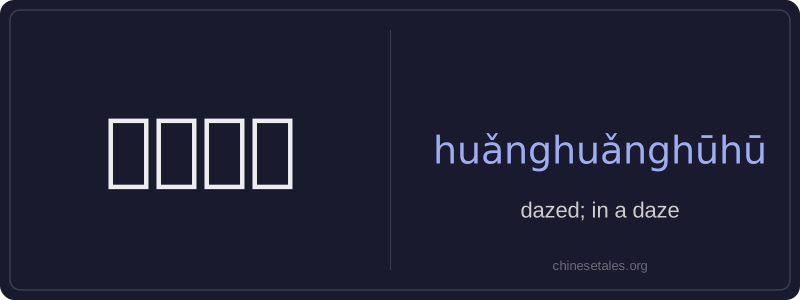
‘Huǎnghuǎnghūhū’ is a reduplicated, four-character expression that vividly conveys a mental state of being dazed, unfocused, or mentally absent—like drifting in a fog. The character 恍 (huǎng) suggests suddenness or vagueness, often linked to fleeting impressions or confusion; 惚 (hū) reinforces this with a sense of mental cloudiness or detachment. Together, the repetition intensifies the feeling: it’s not just momentary distraction, but a sustained, dreamy disconnection from one’s surroundings or task.
This word is commonly used to describe someone who appears physically present but mentally elsewhere—perhaps after sleep deprivation, shock, daydreaming, or emotional overwhelm. It carries a neutral-to-slightly-negative tone and often implies reduced alertness or responsiveness. While it can modify verbs (e.g., ‘恍恍惚惚地走’) or serve as a predicate adjective (e.g., ‘他看起来恍恍惚惚的’), it rarely stands alone as a noun and is almost never used in formal writing or technical contexts.
Example Sentences
Related Words
国语
‘Guó yǔ’ literally means 'national language'—
无论谁
‘无论谁’ (wú lùn shéi) is a pronoun meaning
不对
不对 (bù duì) literally combines 不 (bù), meani
外语
‘外语’ literally means ‘outside language’ —
我的
我的 (wǒ de) is a possessive pronoun meaning 'my'
亲笔
‘亲笔’ literally means ‘one’s own hand’—comb
违规
违规 (wéi guī) literally means 'to violate rules
面条
‘面条’ (miàn tiáo) literally means ‘flour str