Word Explanation
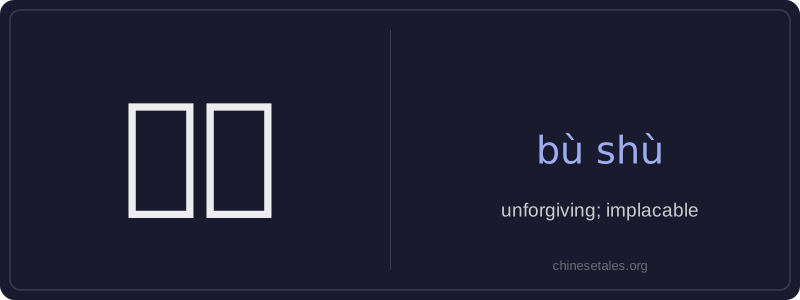
不恕 is an adjective meaning 'unforgiving' or 'implacable', describing a person or attitude that refuses to pardon wrongdoing, shows no mercy, and remains rigidly resentful. The character 不 means 'not' or 'un-', while 恕 means 'forgiveness', 'leniency', or 'empathy'—literally 'as if it were oneself', reflecting Confucian ethics of mutual understanding. Together, 不恕 negates that empathetic capacity, indicating moral inflexibility or deep-seated resentment.
This term carries a formal, literary tone and appears more often in classical texts, philosophical discussions, or serious modern writing (e.g., critiques of justice or character analysis). It is rarely used in casual speech; native speakers typically prefer simpler expressions like 不原谅 (bù yuánliàng) for 'won’t forgive'. 不恕 implies a principled or even righteous hardness—not mere anger, but an unyielding stance rooted in moral conviction or wounded dignity.
Example Sentences
Related Words
国语
‘Guó yǔ’ literally means 'national language'—
无论谁
‘无论谁’ (wú lùn shéi) is a pronoun meaning
不对
不对 (bù duì) literally combines 不 (bù), meani
外语
‘外语’ literally means ‘outside language’ —
我的
我的 (wǒ de) is a possessive pronoun meaning 'my'
亲笔
‘亲笔’ literally means ‘one’s own hand’—comb
违规
违规 (wéi guī) literally means 'to violate rules
面条
‘面条’ (miàn tiáo) literally means ‘flour str