Word Explanation
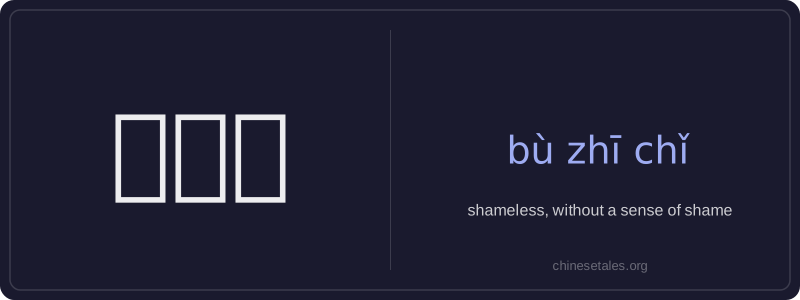
'Bù zhī chǐ' literally means 'not know shame' — it describes a person who lacks moral self-awareness and feels no embarrassment or remorse for behavior that violates social or ethical norms. The character 不 (bù) negates the verb 知 (zhī, 'to know'), and 耻 (chǐ) means 'shame' or 'a sense of disgrace'. Together, they form a compound adjective emphasizing a profound absence of conscience or humility.
This term carries strong negative connotation and is often used in moral criticism, journalism, or formal discourse to condemn unethical, arrogant, or brazen conduct — such as public lying, exploitation, or hypocrisy. It’s more severe than casual terms like 'shameless' and implies a deep-rooted character flaw rather than momentary impropriety. While occasionally used in literary or rhetorical contexts, it’s rarely employed lightly in everyday speech due to its sharp moral judgment.
Example Sentences
Related Words
国语
‘Guó yǔ’ literally means 'national language'—
无论谁
‘无论谁’ (wú lùn shéi) is a pronoun meaning
不对
不对 (bù duì) literally combines 不 (bù), meani
外语
‘外语’ literally means ‘outside language’ —
我的
我的 (wǒ de) is a possessive pronoun meaning 'my'
亲笔
‘亲笔’ literally means ‘one’s own hand’—comb
违规
违规 (wéi guī) literally means 'to violate rules
面条
‘面条’ (miàn tiáo) literally means ‘flour str