Word Explanation
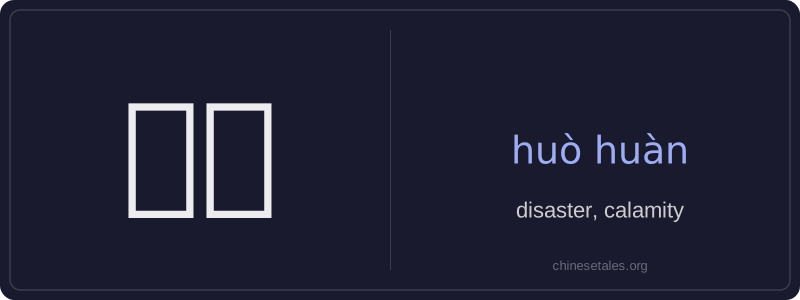
祸患 is a formal, literary noun meaning 'disaster' or 'calamity'—an event causing great harm, suffering, or destruction. It combines two characters with overlapping negative meanings: 祸 (huò) means 'misfortune' or 'trouble', often implying moral or cosmic retribution, while 患 (huàn) means 'affliction', 'plague', or 'source of worry'. Together, they intensify the sense of grave, often large-scale adversity—not just minor mishaps but serious threats to safety, stability, or well-being.
The term appears frequently in classical texts, historical narratives, and modern formal writing (e.g., news reports on natural disasters or public health crises). It carries a weighty, somewhat solemn tone and is rarely used in casual speech. While it can refer to human-caused crises (e.g., war, corruption), it’s also commonly applied to natural calamities like floods, plagues, or invasive species outbreaks—hence its relevance to the 'Animals' topic, especially when discussing ecological threats such as pest infestations or disease-carrying wildlife.
Example Sentences
Related Words
国语
‘Guó yǔ’ literally means 'national language'—
无论谁
‘无论谁’ (wú lùn shéi) is a pronoun meaning
不对
不对 (bù duì) literally combines 不 (bù), meani
外语
‘外语’ literally means ‘outside language’ —
我的
我的 (wǒ de) is a possessive pronoun meaning 'my'
亲笔
‘亲笔’ literally means ‘one’s own hand’—comb
违规
违规 (wéi guī) literally means 'to violate rules
面条
‘面条’ (miàn tiáo) literally means ‘flour str