Word Explanation
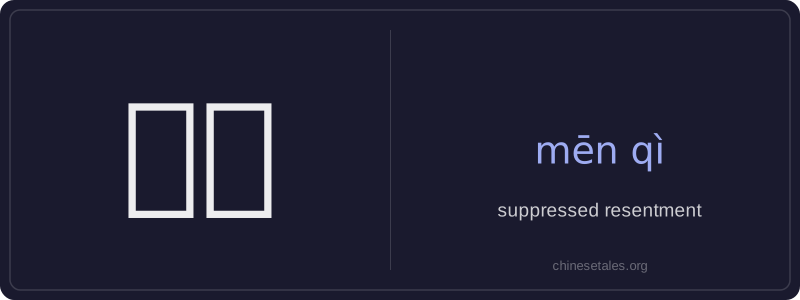
‘闷气’ (mēn qì) literally combines ‘闷’ (mēn), meaning ‘stuffy’, ‘oppressive’, or ‘suppressed’, and ‘气’ (qì), meaning ‘qi’ or ‘anger/resentment’. Together, it refers to a specific emotional state: suppressed resentment — anger that is held in rather than expressed openly. This feeling often arises when someone feels wronged but chooses not to confront the issue, leading to internal tension, sullen silence, or passive withdrawal.
The term carries a distinctly negative connotation and implies emotional stagnation — like air trapped in a closed room. It’s commonly used to describe interpersonal conflicts, especially within families or close relationships, where direct communication is avoided. Unlike ‘生气’ (shēng qì), which signals active, visible anger, ‘闷气’ suggests quiet, brooding dissatisfaction that may linger for hours or days. It’s frequently paired with verbs like ‘生’ (shēng, ‘to generate’) or ‘憋’ (biē, ‘to suppress’), as in ‘生闷气’ or ‘憋闷气’.
Example Sentences
Related Words
国语
‘Guó yǔ’ literally means 'national language'—
无论谁
‘无论谁’ (wú lùn shéi) is a pronoun meaning
不对
不对 (bù duì) literally combines 不 (bù), meani
外语
‘外语’ literally means ‘outside language’ —
我的
我的 (wǒ de) is a possessive pronoun meaning 'my'
亲笔
‘亲笔’ literally means ‘one’s own hand’—comb
违规
违规 (wéi guī) literally means 'to violate rules
面条
‘面条’ (miàn tiáo) literally means ‘flour str