Word Explanation
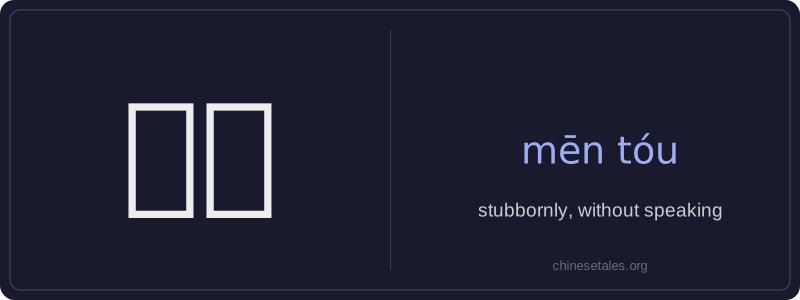
‘闷头’ is an adverbial phrase meaning 'stubbornly, silently, or without speaking up'—it describes doing something in a withdrawn, sullen, or uncommunicative way. The character 闷 (mēn) conveys suppression, stifling, or emotional constriction (as in 闷气, 'to hold in anger'), while 头 (tóu) here functions as a noun suffix that adds a sense of direction or manner—similar to how it appears in phrases like 埋头 ('bend one’s head', i.e., 'diligently concentrate'). Together, 闷头 evokes the image of someone with their head down and mouth shut, persisting inwardly without explanation or interaction.
This expression often carries a slightly negative or empathetic nuance: it may suggest quiet resentment, stubborn determination, or emotional withdrawal—not mere silence, but silence paired with action or resistance. It commonly modifies verbs like 干 (do), 想 (think), or 走 (walk), and appears frequently in spoken Mandarin, especially when describing reactions to criticism, disappointment, or pressure.
Example Sentences
Related Words
国语
‘Guó yǔ’ literally means 'national language'—
无论谁
‘无论谁’ (wú lùn shéi) is a pronoun meaning
不对
不对 (bù duì) literally combines 不 (bù), meani
外语
‘外语’ literally means ‘outside language’ —
我的
我的 (wǒ de) is a possessive pronoun meaning 'my'
亲笔
‘亲笔’ literally means ‘one’s own hand’—comb
违规
违规 (wéi guī) literally means 'to violate rules
面条
‘面条’ (miàn tiáo) literally means ‘flour str