Word Explanation
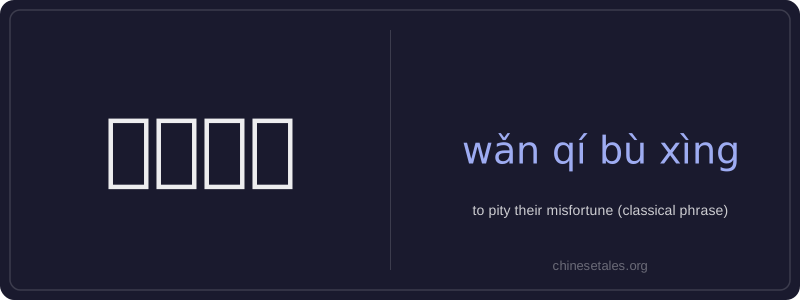
"Wǎn qí bù xìng" is a classical Chinese phrase meaning 'to pity their misfortune'—a concise, literary expression conveying deep sympathy for another’s suffering. Each character contributes to the meaning: 惋 (wǎn) means 'to lament' or 'to feel sorrow'; 其 (qí) is a third-person possessive pronoun ('their' or 'his/her'); 不 (bù) is the negation particle; and 幸 (xìng) means 'happiness' or 'good fortune'. Together, they form a four-character idiom-like structure expressing empathetic sorrow toward someone else’s hardship.
This phrase appears most often in formal writing, essays, literary criticism, or moral reflections—especially when discussing characters in literature, historical figures, or social injustices. It carries a tone of dignified compassion rather than casual sympathy, and is rarely used in spoken conversation. Though grammatically verb-like, it functions as a set phrase that typically follows a subject and precedes a clause or noun phrase indicating the object of pity.
Example Sentences
Related Words
国语
‘Guó yǔ’ literally means 'national language'—
无论谁
‘无论谁’ (wú lùn shéi) is a pronoun meaning
不对
不对 (bù duì) literally combines 不 (bù), meani
外语
‘外语’ literally means ‘outside language’ —
违规
违规 (wéi guī) literally means 'to violate rules
我的
我的 (wǒ de) is a possessive pronoun meaning 'my'
亲笔
‘亲笔’ literally means ‘one’s own hand’—comb
面条
‘面条’ (miàn tiáo) literally means ‘flour str