Word Explanation
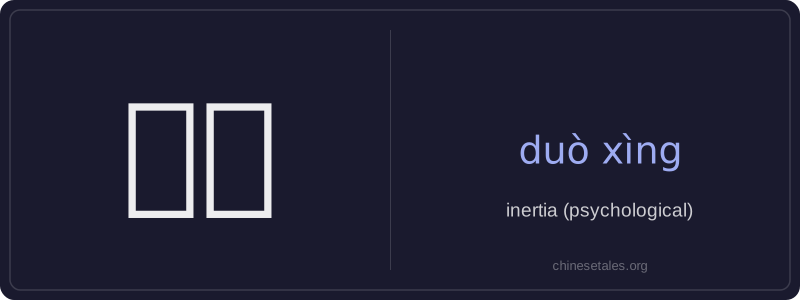
‘惰性’ literally combines ‘惰’ (duò), meaning ‘laziness’ or ‘indolence’, and ‘性’ (xìng), meaning ‘nature’, ‘quality’, or ‘tendency’. Together, it refers to a psychological inertia — the natural human tendency to resist change, avoid effort, or remain in a current state (e.g., procrastination, reluctance to start tasks, or clinging to habits). Unlike physical inertia in physics, 惰性 is used almost exclusively for mental or behavioral resistance.
This term appears frequently in self-improvement, education, psychology, and workplace contexts. It’s neutral in register but often carries a slightly negative connotation when describing unproductive stagnation. It’s not about momentary tiredness, but rather an ingrained pattern of avoidance or passivity — like putting off important decisions or failing to act despite knowing better. Native speakers use it to reflect critically on personal or group behavior, not as a clinical diagnosis.
Example Sentences
Related Words
国语
‘Guó yǔ’ literally means 'national language'—
无论谁
‘无论谁’ (wú lùn shéi) is a pronoun meaning
不对
不对 (bù duì) literally combines 不 (bù), meani
外语
‘外语’ literally means ‘outside language’ —
违规
违规 (wéi guī) literally means 'to violate rules
我的
我的 (wǒ de) is a possessive pronoun meaning 'my'
亲笔
‘亲笔’ literally means ‘one’s own hand’—comb
面条
‘面条’ (miàn tiáo) literally means ‘flour str