Word Explanation
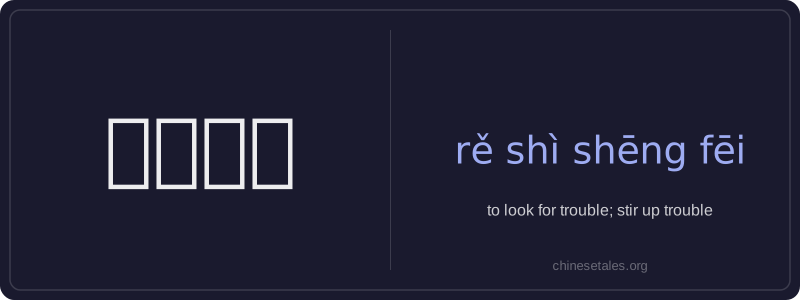
‘惹是生非’ is a four-character idiom meaning to deliberately look for trouble, provoke conflict, or stir up unnecessary disputes. Literally, it breaks down as: 惹 (rě) — 'to provoke or invite'; 是 (shì) — here part of the fixed phrase ‘是非’, meaning 'quarrels or disputes'; 生 (shēng) — 'to create or generate'; 非 (fēi) — again part of ‘是非’, reinforcing the idea of wrongdoing or discord. Together, the phrase vividly conveys the act of actively instigating trouble rather than merely getting caught up in it.
This idiom carries a strong negative connotation and is commonly used in spoken and written Mandarin to criticize someone’s disruptive or meddlesome behavior — especially when they interfere without cause or exaggerate minor issues into major conflicts. It often appears in warnings ('Don’t go around惹是生非!') or judgments about irresponsible or provocative people, such as gossipers, bullies, or attention-seekers.
Example Sentences
Related Words
国语
‘Guó yǔ’ literally means 'national language'—
无论谁
‘无论谁’ (wú lùn shéi) is a pronoun meaning
不对
不对 (bù duì) literally combines 不 (bù), meani
外语
‘外语’ literally means ‘outside language’ —
违规
违规 (wéi guī) literally means 'to violate rules
我的
我的 (wǒ de) is a possessive pronoun meaning 'my'
亲笔
‘亲笔’ literally means ‘one’s own hand’—comb
面条
‘面条’ (miàn tiáo) literally means ‘flour str