Word Explanation
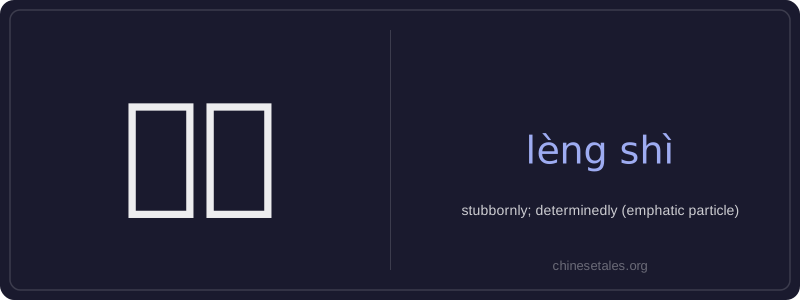
‘愣是’ is an emphatic adverbial phrase used to express strong determination, stubborn persistence, or unexpected success despite difficulty or expectation to the contrary. Though it contains the characters 愣 (‘dazed, stunned’) and 是 (‘to be’), its meaning is idiomatic and not derived from their individual definitions — it functions as a fixed, inseparable unit. It typically appears before a verb or adjective to highlight that an action was carried out resolutely, often against odds, resistance, or logic.
This expression carries a colloquial, slightly informal tone and is common in Northern Mandarin speech and literature. It often conveys admiration, exasperation, or surprise depending on context — for instance, praising someone’s grit or expressing disbelief at an unlikely outcome. It never stands alone and always modifies a predicate; it cannot function as a noun, verb, or conjunction.
Example Sentences
Related Words
国语
‘Guó yǔ’ literally means 'national language'—
无论谁
‘无论谁’ (wú lùn shéi) is a pronoun meaning
不对
不对 (bù duì) literally combines 不 (bù), meani
外语
‘外语’ literally means ‘outside language’ —
违规
违规 (wéi guī) literally means 'to violate rules
我的
我的 (wǒ de) is a possessive pronoun meaning 'my'
亲笔
‘亲笔’ literally means ‘one’s own hand’—comb
面条
‘面条’ (miàn tiáo) literally means ‘flour str