Word Explanation
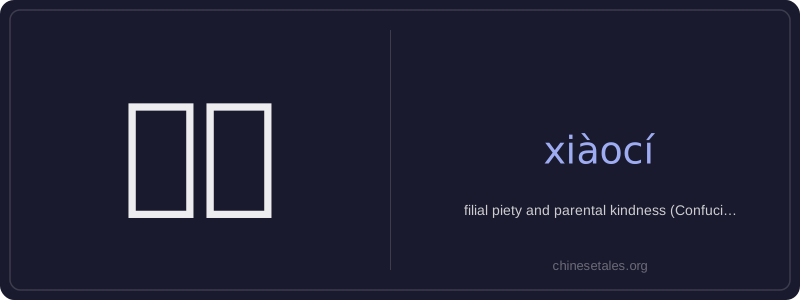
孝慈 (xiàocí) is a classical Confucian compound noun representing the complementary moral duties that bind family relationships: 孝 (xiào) means 'filial piety' — the respect, care, and obedience children owe their parents and elders; 慈 (cí) means 'parental kindness' or 'benevolent love' — the nurturing, protection, and compassion parents offer their children. Together, they form a reciprocal ethical ideal: harmony in the family arises not from one-sided duty but from mutual moral responsibility across generations.
This term appears frequently in classical texts like the *Book of Rites* and modern discussions of traditional Chinese ethics. It’s often invoked in education, public discourse on social values, and family counseling to emphasize balanced intergenerational relationships. While 孝 is more commonly used alone in daily speech, 孝慈 carries a formal, literary tone and is rarely used conversationally outside philosophical, historical, or ceremonial contexts.
Example Sentences
Related Words
国语
‘Guó yǔ’ literally means 'national language'—
无论谁
‘无论谁’ (wú lùn shéi) is a pronoun meaning
不对
不对 (bù duì) literally combines 不 (bù), meani
外语
‘外语’ literally means ‘outside language’ —
违规
违规 (wéi guī) literally means 'to violate rules
我的
我的 (wǒ de) is a possessive pronoun meaning 'my'
亲笔
‘亲笔’ literally means ‘one’s own hand’—comb
面条
‘面条’ (miàn tiáo) literally means ‘flour str