Word Explanation
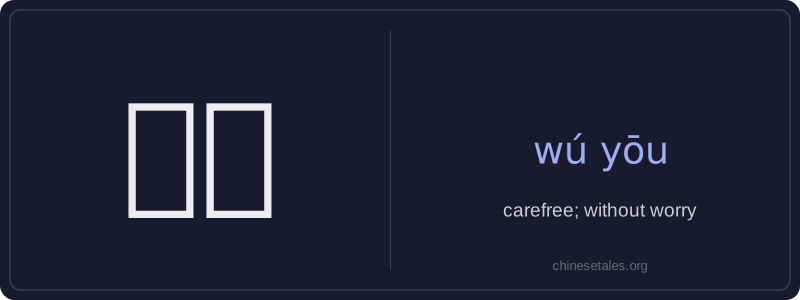
无忧 (wú yōu) literally means 'without worry' — 无 (wú) means 'not' or 'without,' and 忧 (yōu) means 'worry,' 'anxiety,' or 'sorrow.' Together, they form a compound adjective describing a state of complete freedom from care or distress. It conveys deep tranquility and emotional security, often implying an ideal or aspirational condition rather than everyday casual relaxation.
This term appears frequently in classical literature, philosophical texts (especially Daoist and Buddhist contexts), and modern expressions about ideal living conditions — such as '无忧无虑' (wú yōu wú lǜ, 'carefree and without anxiety'). It’s commonly used to describe people, lifestyles, environments, or states of mind, especially when emphasizing inner peace, safety, or harmony. While positive and poetic, it’s not typically used for temporary moods like 'I’m relaxed today'; instead, it suggests a sustained, profound absence of concern.
Example Sentences
Related Words
国语
‘Guó yǔ’ literally means 'national language'—
无论谁
‘无论谁’ (wú lùn shéi) is a pronoun meaning
不对
不对 (bù duì) literally combines 不 (bù), meani
外语
‘外语’ literally means ‘outside language’ —
违规
违规 (wéi guī) literally means 'to violate rules
我的
我的 (wǒ de) is a possessive pronoun meaning 'my'
亲笔
‘亲笔’ literally means ‘one’s own hand’—comb
面条
‘面条’ (miàn tiáo) literally means ‘flour str