Word Explanation
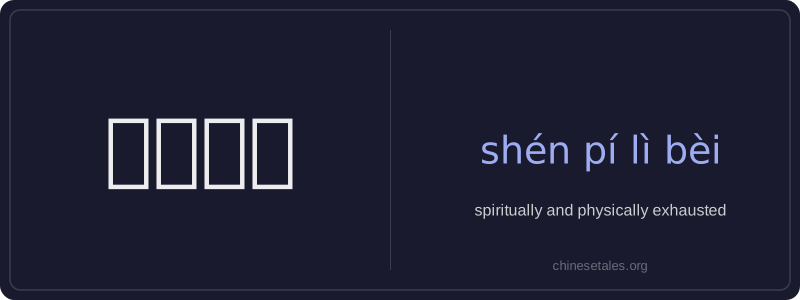
神疲力惫 is a formal, literary Chinese compound adjective meaning 'spiritually and physically exhausted' — conveying total depletion of both mental energy (神, 'spirit/mind') and physical strength (力, 'strength'; 惫, 'extreme fatigue'). The character 疲 reinforces general weariness, while 惫 intensifies it to the point of utter exhaustion. Together, the four characters create a vivid, emphatic description of profound fatigue affecting the whole person.
This term is commonly used in medical contexts, classical literature, and formal writing to describe severe exhaustion resulting from prolonged illness, overwork, or emotional strain. It’s stronger than everyday terms like 累 (lèi, 'tired') and carries a tone of seriousness or gravity — rarely used in casual speech. While grammatically an adjective, it often functions predicatively (e.g., 他神疲力惫) or attributively before nouns in written style (e.g., 神疲力惫的状态).
Example Sentences
Related Words
国语
‘Guó yǔ’ literally means 'national language'—
无论谁
‘无论谁’ (wú lùn shéi) is a pronoun meaning
不对
不对 (bù duì) literally combines 不 (bù), meani
外语
‘外语’ literally means ‘outside language’ —
违规
违规 (wéi guī) literally means 'to violate rules
我的
我的 (wǒ de) is a possessive pronoun meaning 'my'
亲笔
‘亲笔’ literally means ‘one’s own hand’—comb
面条
‘面条’ (miàn tiáo) literally means ‘flour str