Word Explanation
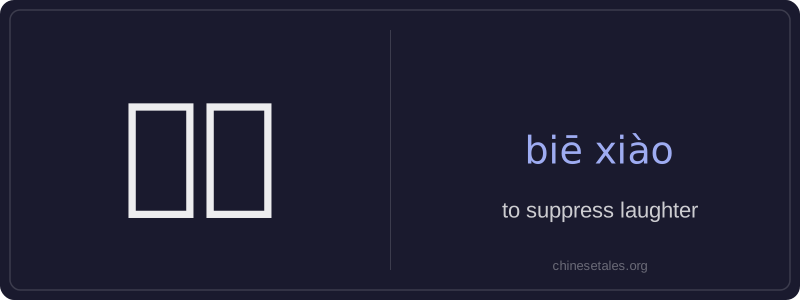
憋笑 is a verb meaning 'to suppress or hold back laughter' — literally combining 憋 (to hold in, restrain, stifle) and 笑 (to laugh). It describes the physical and emotional effort of keeping laughter from escaping, often when something is funny but inappropriate to laugh at — such as during a serious meeting, a solemn ceremony, or while trying not to disturb others. The action usually involves facial tension, covering the mouth, turning away, or biting one’s lip.
This word carries a slightly informal, everyday register and often implies amusement mixed with self-control or social awareness. It’s commonly used in spoken Chinese and descriptive writing, especially when narrating humorous or awkward moments. Unlike generic terms for 'laughing', 憋笑 emphasizes the active suppression, making it vivid and expressive — frequently appearing in stories, dialogues, and social media captions describing relatable, cringe-funny situations.
Example Sentences
Related Words
国语
‘Guó yǔ’ literally means 'national language'—
无论谁
‘无论谁’ (wú lùn shéi) is a pronoun meaning
不对
不对 (bù duì) literally combines 不 (bù), meani
外语
‘外语’ literally means ‘outside language’ —
违规
违规 (wéi guī) literally means 'to violate rules
我的
我的 (wǒ de) is a possessive pronoun meaning 'my'
亲笔
‘亲笔’ literally means ‘one’s own hand’—comb
面条
‘面条’ (miàn tiáo) literally means ‘flour str