Word Explanation
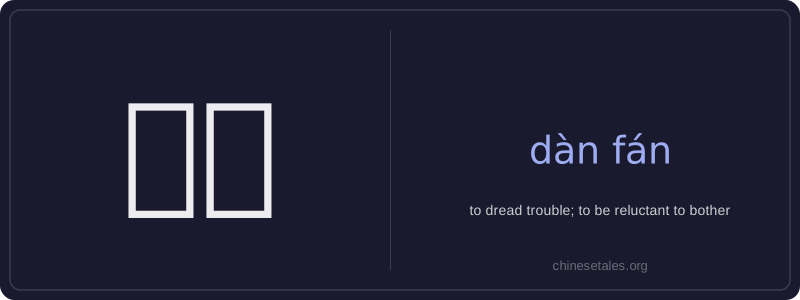
惮烦 (dàn fán) is a literary and somewhat formal verb meaning 'to dread trouble' or 'to be reluctant to bother' — expressing an aversion to effort, inconvenience, or complications. The character 惮 (dàn) means 'to fear' or 'to shrink from', while 烦 (fán) means 'trouble', 'bother', or 'annoyance'; together, they convey a psychological hesitation rooted in the expectation of difficulty or fuss.
This word often appears in written Chinese or formal speech, especially when describing someone’s cautious, weary, or overly conscientious attitude toward tasks that seem burdensome — not due to laziness, but out of sensitivity to disruption or excessive demands. It carries a subtle nuance of conscientious reluctance, sometimes bordering on fastidiousness or timidity. It is rarely used in casual conversation among young speakers, who might prefer simpler alternatives like 怕麻烦 (pà máfan) or 不想费事 (bù xiǎng fèi shì).
Example Sentences
Related Words
国语
‘Guó yǔ’ literally means 'national language'—
无论谁
‘无论谁’ (wú lùn shéi) is a pronoun meaning
不对
不对 (bù duì) literally combines 不 (bù), meani
外语
‘外语’ literally means ‘outside language’ —
违规
违规 (wéi guī) literally means 'to violate rules
我的
我的 (wǒ de) is a possessive pronoun meaning 'my'
亲笔
‘亲笔’ literally means ‘one’s own hand’—comb
面条
‘面条’ (miàn tiáo) literally means ‘flour str