Word Explanation
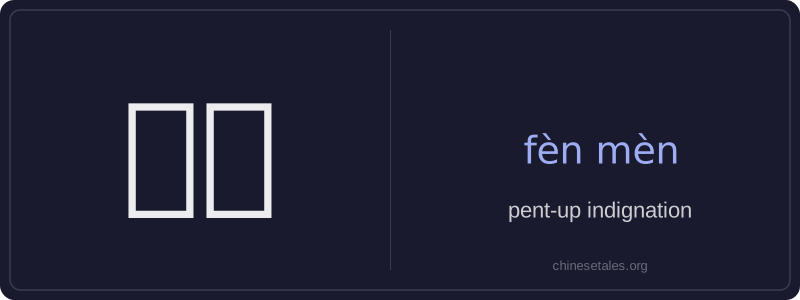
‘Fèn mèn’ is a formal, literary noun meaning 'pent-up indignation'—a deep, suppressed feeling of anger and resentment, often arising from injustice, powerlessness, or prolonged frustration. The first character 愤 (fèn) means 'anger' or 'indignation', while the second 懑 (mèn) conveys 'stifled emotion' or 'inner turmoil'; together, they emphasize emotional pressure that cannot be freely expressed. This word carries strong negative connotations and suggests psychological weight rather than outward rage.
It commonly appears in written Chinese—essays, news reports, literature, and political or social commentary—to describe collective or individual grievance under constraint. It’s rarely used in casual speech; native speakers tend to choose simpler terms like 生气 (shēngqì) or 愤怒 (fènnù) in everyday conversation. Because it implies both moral outrage and emotional containment, it often signals systemic or structural causes—not just personal irritation.
Example Sentences
Related Words
国语
‘Guó yǔ’ literally means 'national language'—
无论谁
‘无论谁’ (wú lùn shéi) is a pronoun meaning
不对
不对 (bù duì) literally combines 不 (bù), meani
外语
‘外语’ literally means ‘outside language’ —
违规
违规 (wéi guī) literally means 'to violate rules
我的
我的 (wǒ de) is a possessive pronoun meaning 'my'
亲笔
‘亲笔’ literally means ‘one’s own hand’—comb
面条
‘面条’ (miàn tiáo) literally means ‘flour str