Word Explanation
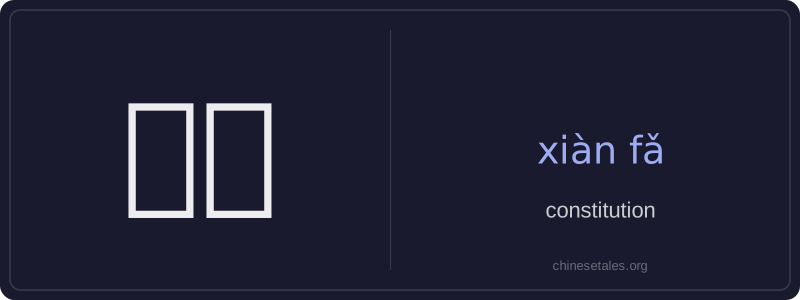
宪法 (xiàn fǎ) is the supreme legal document of a country, establishing the fundamental principles, structure of government, and basic rights and duties of citizens. The character 宪 (xiàn) historically means 'distinguished', 'excellent', or 'sacred'—here conveying solemnity and authority—while 法 (fǎ) means 'law' or 'legal system'. Together, they signify the highest, most authoritative law that all other laws must conform to. In China, the current Constitution was adopted in 1982 and has been amended several times to reflect social and political developments.
The word is used formally and exclusively in legal, political, and civic education contexts—not in everyday casual speech. It appears frequently in official documents, news reports on legislative processes, school textbooks, and public awareness campaigns like 'Constitution Day' (December 4). Unlike ordinary laws (法律, fǎlǜ), the Constitution cannot be changed easily; amendments require broad consensus and special procedures, underscoring its foundational role in governance and rule of law.
Example Sentences
Related Words
国语
‘Guó yǔ’ literally means 'national language'—
无论谁
‘无论谁’ (wú lùn shéi) is a pronoun meaning
不对
不对 (bù duì) literally combines 不 (bù), meani
外语
‘外语’ literally means ‘outside language’ —
违规
违规 (wéi guī) literally means 'to violate rules
我的
我的 (wǒ de) is a possessive pronoun meaning 'my'
亲笔
‘亲笔’ literally means ‘one’s own hand’—comb
面条
‘面条’ (miàn tiáo) literally means ‘flour str