Word Explanation
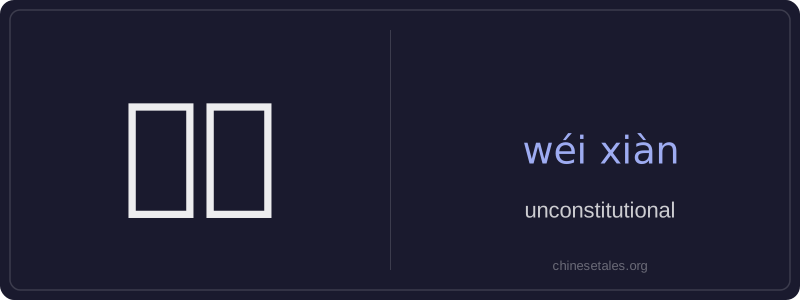
违宪 literally means 'to violate the constitution' — 违 (wéi) means 'to violate, contravene', and 宪 (xiàn) is short for 宪法 (xiànfǎ), meaning 'constitution'. Together, 违宪 functions as an adjective describing laws, regulations, government actions, or judicial decisions that conflict with constitutional principles or provisions. It is a formal, legal term used almost exclusively in official, academic, or media discourse about governance, rights protection, and rule-of-law mechanisms.
In China, the term carries strong institutional weight: courts or the National People’s Congress Standing Committee may review whether legislation is 违宪, and such findings can lead to annulment or revision. While not used in casual speech, it appears frequently in legal commentary, news reports on judicial reform, and constitutional education materials. Its tone is serious and authoritative, signaling fundamental legal inconsistency rather than mere policy disagreement.
Example Sentences
Related Words
国语
‘Guó yǔ’ literally means 'national language'—
无论谁
‘无论谁’ (wú lùn shéi) is a pronoun meaning
不对
不对 (bù duì) literally combines 不 (bù), meani
外语
‘外语’ literally means ‘outside language’ —
违规
违规 (wéi guī) literally means 'to violate rules
我的
我的 (wǒ de) is a possessive pronoun meaning 'my'
亲笔
‘亲笔’ literally means ‘one’s own hand’—comb
面条
‘面条’ (miàn tiáo) literally means ‘flour str