Word Explanation
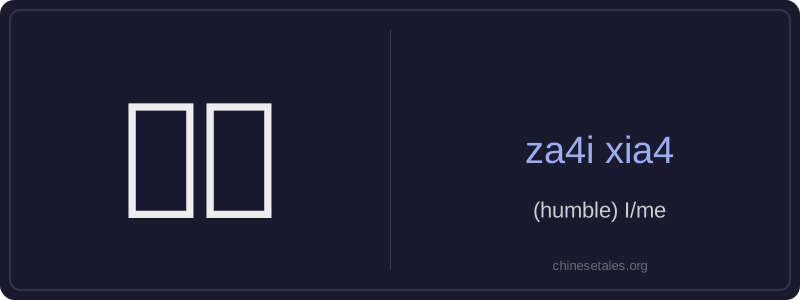
'Zài xià' is a classical, highly humble first-person pronoun meaning 'I' or 'me', literally composed of 在 (zài, 'at') and 下 (xià, 'below'), conveying the idea of 'one who stands below' — expressing deference toward the listener. It originates from traditional Chinese etiquette where speakers positioned themselves socially 'lower' than their interlocutors, especially in formal or literary contexts.
This term is rarely used in modern spoken Mandarin but appears in historical dramas, classical literature, wuxia novels, and stylized speech to evoke antiquity or extreme politeness. Learners should recognize it when reading older texts or watching period films, but avoid using it in everyday conversation, where 我 (wǒ) is appropriate. It carries strong connotations of modesty, self-effacement, and respect — never arrogance or informality.
Example Sentences
Related Words
我的
我的 (wǒ de) is a possessive pronoun meaning 'my'
红色的
红色的 (hóng sè de) is an adjective meaning 'red
学校的
'学校的' is a possessive phrase meaning 'school's'
大的
大的 (dà de) is the attributive form of the adjec
你的
你的 (nǐ de) is a possessive pronoun meaning 'you
妈妈的
'妈妈的' (mā ma de) is a possessive noun phrase m
一天
‘一天’ literally combines the numeral ‘一’ (y
一样
‘一样’ (yí yàng) literally combines ‘一’ (y