Word Explanation
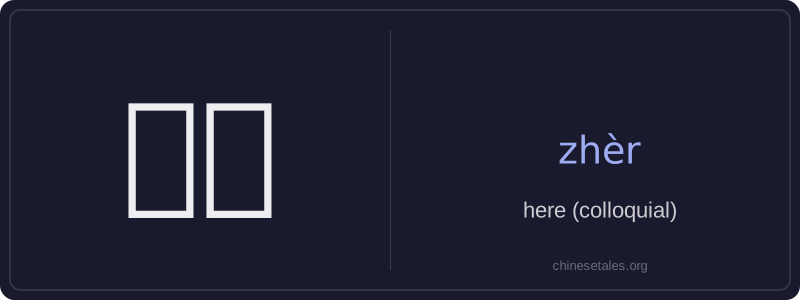
这儿 (zhèr) is a colloquial, contracted form of 这里 (zhèlǐ), both meaning 'here'. The character 这 means 'this', and 儿 is a neutral-tone diminutive suffix that often appears in Northern Mandarin speech, softening or shortening words — it doesn’t carry independent meaning here. Unlike the more formal or standard 这里, 这儿 is commonly used in everyday spoken Chinese, especially in Beijing and northern regions, and conveys a relaxed, familiar tone.
This word functions primarily as an adverb indicating location, answering questions like 'where?' It can also serve as a noun meaning 'this place' when followed by measure words or classifiers (e.g., 这儿有个公园). It’s frequently used in directions, invitations, casual instructions, and spontaneous speech — but rarely in formal writing, official documents, or news broadcasts where 这里 is preferred.
Example Sentences
Related Words
我的
我的 (wǒ de) is a possessive pronoun meaning 'my'
在家
'Zài jiā' literally combines the preposition 'z
红色的
红色的 (hóng sè de) is an adjective meaning 'red
一天
‘一天’ literally combines the numeral ‘一’ (y
不对
不对 (bù duì) literally combines 不 (bù), meani
不要
'不要' (bù yào) is a two-character verb phrase m
这边
这边 (zhè biān) literally combines 这 (zhè, 'th
学校的
'学校的' is a possessive phrase meaning 'school's'