Word Explanation
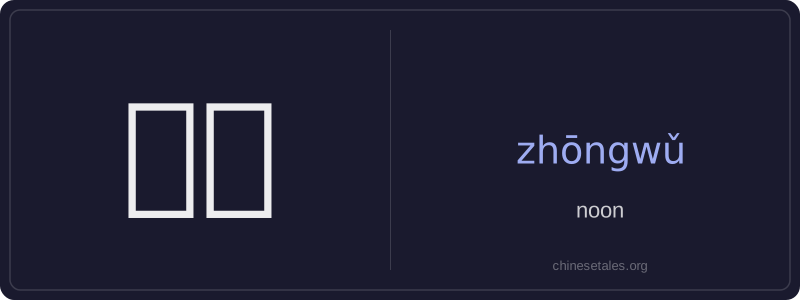
'Zhōngwǔ' literally means 'middle of wǔ' — referring to the traditional Chinese hour system where 'wǔ' (the seventh of the twelve earthly branches) corresponds to 11 a.m. to 1 p.m., with noon at its center. The character 中 (zhōng) means 'middle' or 'center', and 午 (wǔ) is both a time marker and the zodiac sign for the horse, historically associated with midday heat and peak yang energy. Together, they form a precise, culturally rooted term for noon — not just 12:00 exactly, but the general noon period, especially in daily scheduling.
In modern Mandarin, 'zhōngwǔ' functions as a time noun used before measure words like 'shí' (hour) or in time expressions like 'zhōngwǔ yǐqián' (before noon). It’s neutral in register and appears frequently in timetables, meal references, weather reports, and casual speech — for example, 'zhōngwǔ fàn' (lunch) literally means 'noon meal'. Unlike vague terms like 'shàngwǔ' (morning) or 'xiàwǔ' (afternoon), 'zhōngwǔ' pinpoints the central hour of the day and carries no ambiguity.
Example Sentences
Related Words
我的
我的 (wǒ de) is a possessive pronoun meaning 'my'
在家
'Zài jiā' literally combines the preposition 'z
中国
‘Zhōngguó’ literally means ‘Middle Kingdom’
红色的
红色的 (hóng sè de) is an adjective meaning 'red
一天
‘一天’ literally combines the numeral ‘一’ (y
不对
不对 (bù duì) literally combines 不 (bù), meani
不要
'不要' (bù yào) is a two-character verb phrase m
这边
这边 (zhè biān) literally combines 这 (zhè, 'th