Word Explanation
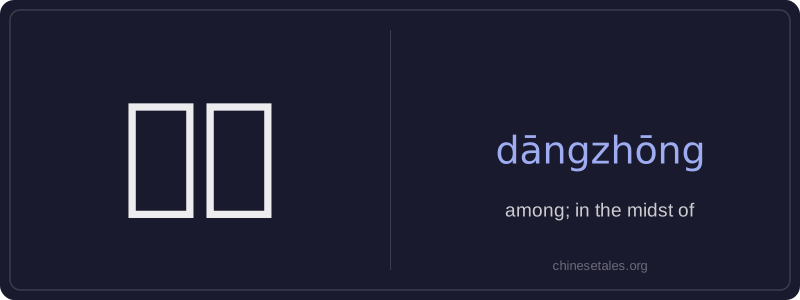
'dāngzhōng' literally combines 'dāng' (meaning 'at', 'during', or 'in the position of') and 'zhōng' (meaning 'middle', 'center', or 'among'). Together, they form a prepositional phrase meaning 'among', 'in the midst of', or 'within'. It emphasizes location or inclusion within a group, space, or timeframe — not just physical placement, but also abstract contexts like a crowd, a list, or a period.
This term is neutral in register and commonly used in both spoken and written Chinese. It typically follows its noun object and precedes the main verb, as in '人群当中' (among the crowd) or '讨论当中' (in the midst of discussion). Unlike the simpler 'zhōng', 'dāngzhōng' adds nuance of being surrounded by or embedded within something larger — it evokes a sense of being enveloped or situated centrally within a defined set or environment.
Example Sentences
Related Words
我的
我的 (wǒ de) is a possessive pronoun meaning 'my'
中国
‘Zhōngguó’ literally means ‘Middle Kingdom’
在家
'Zài jiā' literally combines the preposition 'z
红色的
红色的 (hóng sè de) is an adjective meaning 'red
一天
‘一天’ literally combines the numeral ‘一’ (y
不对
不对 (bù duì) literally combines 不 (bù), meani
不要
'不要' (bù yào) is a two-character verb phrase m
这边
这边 (zhè biān) literally combines 这 (zhè, 'th