Word Explanation
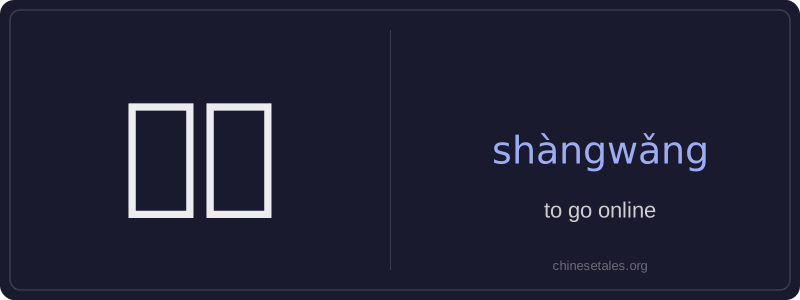
'Shàngwǎng' literally combines 'shàng' (to go up, to get on) and 'wǎng' (net, network), forming a verb meaning 'to go online' — that is, to connect to the internet using a device like a computer, smartphone, or tablet. It’s a common, everyday term used across age groups and contexts, from casual chatting to work-related tasks.
The phrase functions as a separable verb: the object often comes between 'shàng' and 'wǎng', as in 'shàng yí ge wǎng' (go on a website) or 'shàng shénme wǎng' (go on what website). While originally tied to desktop computers, it now applies broadly to any internet access, regardless of device. It’s neutral in register — appropriate in spoken and written Chinese, including texts, emails, and conversations about digital life.
Example Sentences
Related Words
我的
我的 (wǒ de) is a possessive pronoun meaning 'my'
中国
‘Zhōngguó’ literally means ‘Middle Kingdom’
在家
'Zài jiā' literally combines the preposition 'z
中学
'Zhōngxué' literally combines 'zhōng' (middle)
红色的
红色的 (hóng sè de) is an adjective meaning 'red
一天
‘一天’ literally combines the numeral ‘一’ (y
不对
不对 (bù duì) literally combines 不 (bù), meani
不要
'不要' (bù yào) is a two-character verb phrase m