Word Explanation
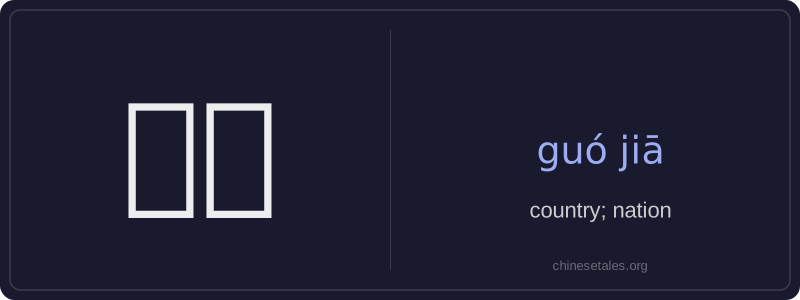
‘国家’ (guó jiā) literally combines ‘国’ (guó), meaning ‘state’ or ‘territory,’ and ‘家’ (jiā), meaning ‘home’ or ‘family.’ Together, they form a compound noun that means ‘country’ or ‘nation’ — emphasizing both political sovereignty and collective identity. It refers to a sovereign state with defined borders, government, and people, such as China, France, or Brazil.
This term is formal and neutral, commonly used in official, academic, and everyday contexts — for example, when discussing national policies, international relations, or cultural identity. Unlike colloquial terms like ‘祖国’ (zǔ guó, ‘motherland’) or ‘中国’ (Zhōngguó, ‘China’), ‘国家’ is generic and does not imply emotional attachment or specificity unless modified (e.g., ‘我的国家’ — ‘my country’). It appears frequently in news, textbooks, and administrative documents, and is never used for non-sovereign regions or subnational entities like provinces or cities.
Example Sentences
Related Words
我的
我的 (wǒ de) is a possessive pronoun meaning 'my'
中国
‘Zhōngguó’ literally means ‘Middle Kingdom’
在家
'Zài jiā' literally combines the preposition 'z
中学
'Zhōngxué' literally combines 'zhōng' (middle)
红色的
红色的 (hóng sè de) is an adjective meaning 'red
一天
‘一天’ literally combines the numeral ‘一’ (y
不对
不对 (bù duì) literally combines 不 (bù), meani
不要
'不要' (bù yào) is a two-character verb phrase m