Word Explanation
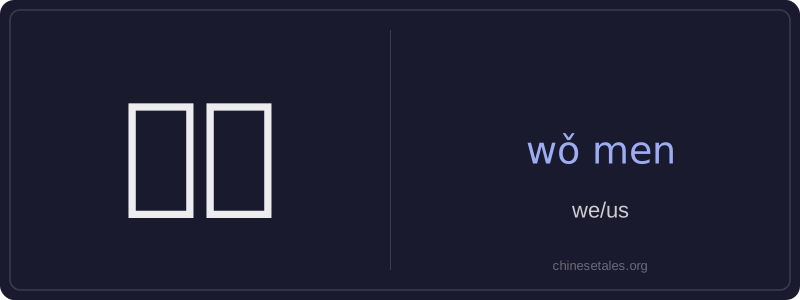
‘我们’ (wǒ men) is the standard first-person plural pronoun in Mandarin, meaning ‘we’ or ‘us’. It consists of the singular pronoun ‘我’ (wǒ, ‘I/me’) combined with the plural marker ‘们’ (men), which attaches to personal pronouns and some nouns referring to people to indicate plurality. Unlike English, Chinese does not distinguish between subject and object forms—‘我们’ serves both roles: ‘We are going’ and ‘He called us’ both use ‘我们’.
This pronoun is neutral in register and used widely in spoken and written Mandarin across all contexts—from casual conversations with friends to formal speeches. It typically refers to a group that includes the speaker and at least one other person. Importantly, ‘们’ cannot be used with nouns unless they refer to people (e.g., *students* or *teachers*), and it never appears after numerals or demonstratives (so ‘these students’ is 这些学生, not 这些学生们). ‘我们’ is never shortened or dropped in subject position, unlike verbs in some other languages.
Example Sentences
Related Words
我的
我的 (wǒ de) is a possessive pronoun meaning 'my'
中国
‘Zhōngguó’ literally means ‘Middle Kingdom’
在家
'Zài jiā' literally combines the preposition 'z
中学
'Zhōngxué' literally combines 'zhōng' (middle)
红色的
红色的 (hóng sè de) is an adjective meaning 'red
一天
‘一天’ literally combines the numeral ‘一’ (y
不对
不对 (bù duì) literally combines 不 (bù), meani
不要
'不要' (bù yào) is a two-character verb phrase m