Word Explanation
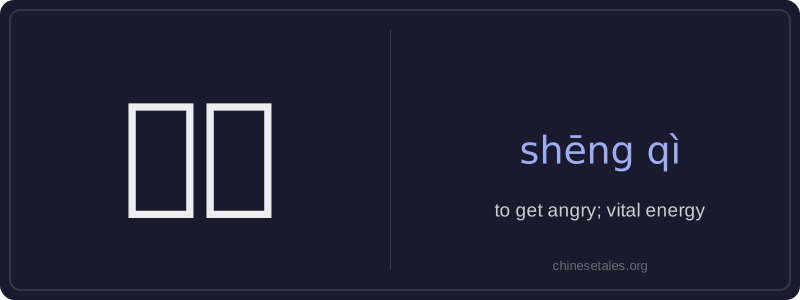
'Shēng qì' literally combines 'shēng' (to be born, to arise) and 'qì' (breath, energy, spirit), conveying the idea of anger 'arising' or 'rising up' within a person. As a verb, it most commonly means 'to get angry' or 'to become upset' — a dynamic, emotionally charged state rather than a static feeling. It’s used in everyday speech to describe a reaction to provocation, unfairness, or frustration.
As a noun, 'shēng qì' can refer to 'vital energy' in traditional Chinese medicine or philosophy — though this usage is far less common in modern spoken Mandarin and appears mainly in classical or specialized contexts. In daily conversation, however, the emotional meaning dominates: people say 'wǒ shēng qì le' ('I’m angry') or ask 'nǐ zěnme shēng qì le?' ('Why are you angry?'). The word implies visible or expressive anger — often accompanied by raised voice, flushed face, or withdrawal — not just quiet annoyance.
Example Sentences
Related Words
我的
我的 (wǒ de) is a possessive pronoun meaning 'my'
中国
‘Zhōngguó’ literally means ‘Middle Kingdom’
一天
‘一天’ literally combines the numeral ‘一’ (y
在家
'Zài jiā' literally combines the preposition 'z
不要
'不要' (bù yào) is a two-character verb phrase m
这边
这边 (zhè biān) literally combines 这 (zhè, 'th
这么
这么 (zhè me) is an adverb meaning 'so' or 'this
中学
'Zhōngxué' literally combines 'zhōng' (middle)