Word Explanation
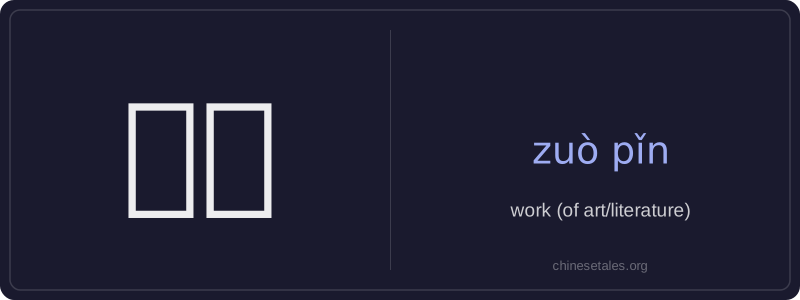
'作品' (zuò pǐn) literally combines '作' (zuò), meaning 'to create' or 'to compose', and '品' (pǐn), meaning 'item', 'object', or 'category'. Together, they refer to a tangible outcome of creative effort — especially in literature, visual arts, music, film, or other cultural fields. It emphasizes the finished product rather than the process, and is used for both individual pieces (e.g., a novel or painting) and collective outputs (e.g., an artist’s entire body of work).
This term is formal and respectful; it’s commonly used in academic, journalistic, and professional contexts — for example, when discussing exhibitions, literary awards, or copyright. Unlike casual terms like '东西' (thing), '作品' carries artistic or intellectual weight. It rarely refers to everyday objects or non-creative outputs (e.g., you wouldn’t call a spreadsheet a '作品'), and it’s not used for natural phenomena or living things.
Example Sentences
Related Words
我的
我的 (wǒ de) is a possessive pronoun meaning 'my'
中国
‘Zhōngguó’ literally means ‘Middle Kingdom’
一天
‘一天’ literally combines the numeral ‘一’ (y
在家
'Zài jiā' literally combines the preposition 'z
不要
'不要' (bù yào) is a two-character verb phrase m
这边
这边 (zhè biān) literally combines 这 (zhè, 'th
这么
这么 (zhè me) is an adverb meaning 'so' or 'this
中学
'Zhōngxué' literally combines 'zhōng' (middle)