Word Explanation
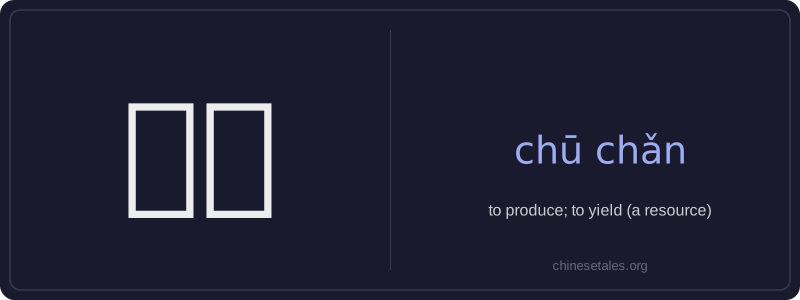
出产 (chū chǎn) is a verb meaning 'to produce' or 'to yield', especially in reference to natural resources, agricultural goods, or regional specialties. The character 出 means 'to go out' or 'to emerge', while 产 means 'to produce' or 'to give birth to'. Together, they convey the idea of something emerging from or being generated by a place or source — often highlighting origin and output rather than human manufacturing. It’s commonly used with places (e.g., provinces, countries) or natural environments (e.g., mountains, rivers, farms).
This word emphasizes what a region or ecosystem naturally provides — for example, tea from Fujian, silk from Jiangsu, or rare minerals from Yunnan. Unlike 制造 (zhì zào, 'to manufacture'), which implies industrial processing, 出产 focuses on inherent, often unprocessed, output. It frequently appears in formal writing, news reports, and economic descriptions, but is also used conversationally when discussing local products or regional advantages.
Example Sentences
Related Words
我的
我的 (wǒ de) is a possessive pronoun meaning 'my'
中国
‘Zhōngguó’ literally means ‘Middle Kingdom’
一天
‘一天’ literally combines the numeral ‘一’ (y
在家
'Zài jiā' literally combines the preposition 'z
不要
'不要' (bù yào) is a two-character verb phrase m
这边
这边 (zhè biān) literally combines 这 (zhè, 'th
这么
这么 (zhè me) is an adverb meaning 'so' or 'this
中学
'Zhōngxué' literally combines 'zhōng' (middle)