Word Explanation
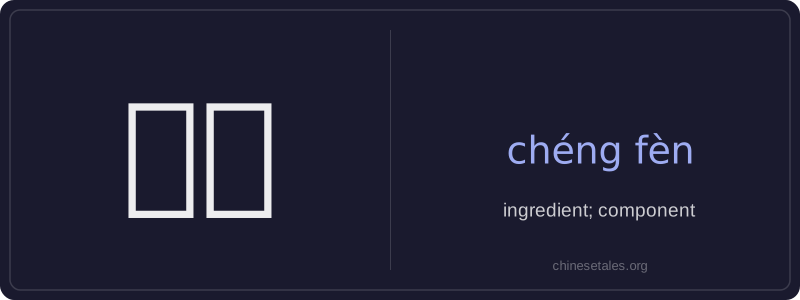
成分 (chéng fèn) literally combines 成 (chéng), meaning 'to become' or 'to form', and 分 (fèn), meaning 'part' or 'portion'. Together, they refer to a constituent part that makes up a whole—especially in contexts like food, medicine, chemistry, or materials. It emphasizes the internal makeup rather than function or appearance.
This word is frequently used in scientific, nutritional, and regulatory settings: ingredient lists on food packaging, chemical analyses, pharmaceutical formulations, and discussions about allergens or additives. While it can occasionally appear in abstract contexts (e.g., 'social成分'), its dominant usage is concrete and factual—denoting measurable, identifiable elements within a composite entity. Unlike the more casual term 材料 (cái liào, 'material'), 成分 carries a precise, analytical nuance, often implying composition by type, proportion, or origin.
Example Sentences
Related Words
我的
我的 (wǒ de) is a possessive pronoun meaning 'my'
中国
‘Zhōngguó’ literally means ‘Middle Kingdom’
一天
‘一天’ literally combines the numeral ‘一’ (y
在家
'Zài jiā' literally combines the preposition 'z
不要
'不要' (bù yào) is a two-character verb phrase m
这边
这边 (zhè biān) literally combines 这 (zhè, 'th
这么
这么 (zhè me) is an adverb meaning 'so' or 'this
中学
'Zhōngxué' literally combines 'zhōng' (middle)