Word Explanation
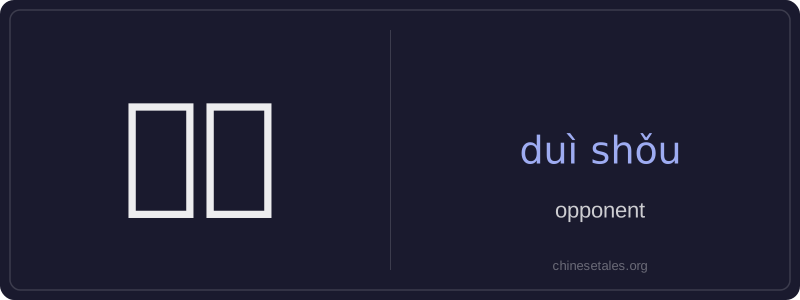
'对手' (duì shǒu) literally combines 'duì' (to face, oppose) and 'shǒu' (hand, person), evoking the image of someone standing face-to-face — hence, an opponent or rival. It refers to a person or group competing against another in contests, debates, sports, business, or even strategic contexts like games or warfare.
This term carries a neutral-to-slightly formal tone and implies mutual engagement: both sides recognize each other’s role in the contest. Unlike '敌人' (enemy), '对手' lacks strong hostility — it emphasizes competition rather than enmity. It’s commonly used in sports commentary, academic debates, martial arts, and business strategy discussions. While occasionally applied metaphorically (e.g., 'nature’s opponent' in ecological writing), its core usage centers on human rivalry where skill, preparation, and fairness are implied.
Example Sentences
Related Words
我的
我的 (wǒ de) is a possessive pronoun meaning 'my'
中国
‘Zhōngguó’ literally means ‘Middle Kingdom’
一天
‘一天’ literally combines the numeral ‘一’ (y
在家
'Zài jiā' literally combines the preposition 'z
不要
'不要' (bù yào) is a two-character verb phrase m
这边
这边 (zhè biān) literally combines 这 (zhè, 'th
这么
这么 (zhè me) is an adverb meaning 'so' or 'this
中学
'Zhōngxué' literally combines 'zhōng' (middle)