Word Explanation
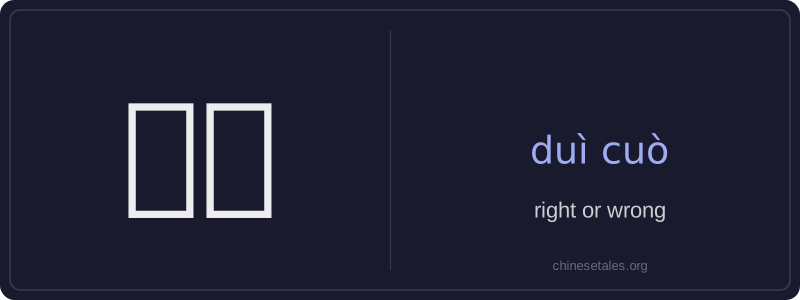
‘对错’ (duì cuò) is a compound noun meaning ‘right or wrong’ — it expresses the binary judgment of correctness versus incorrectness. The first character, 对 (duì), means ‘correct’ or ‘right’, while 错 (cuò) means ‘wrong’ or ‘incorrect’. Together, they form an inseparable pair that functions as a single conceptual unit, often used when evaluating decisions, answers, behavior, or moral choices. Unlike English, where ‘right and wrong’ can be used adjectivally (e.g., ‘a right answer’), ‘对错’ itself is almost always nominal and appears after verbs like 判断 (judgment), 分辨 (distinguish), or 讨论 (discuss).
This term frequently appears in educational, ethical, or everyday reflective contexts — for example, when teachers ask students to identify the ‘right or wrong’ in a statement, or when people reflect on whether a past action was justified. It carries a neutral, objective tone and is commonly used in both spoken and written Chinese, especially in discussions about logic, ethics, or learning outcomes.
Example Sentences
Related Words
我的
我的 (wǒ de) is a possessive pronoun meaning 'my'
中国
‘Zhōngguó’ literally means ‘Middle Kingdom’
学校的
'学校的' is a possessive phrase meaning 'school's'
一天
‘一天’ literally combines the numeral ‘一’ (y
在家
'Zài jiā' literally combines the preposition 'z
不要
'不要' (bù yào) is a two-character verb phrase m
这边
这边 (zhè biān) literally combines 这 (zhè, 'th
这么
这么 (zhè me) is an adverb meaning 'so' or 'this