Word Explanation
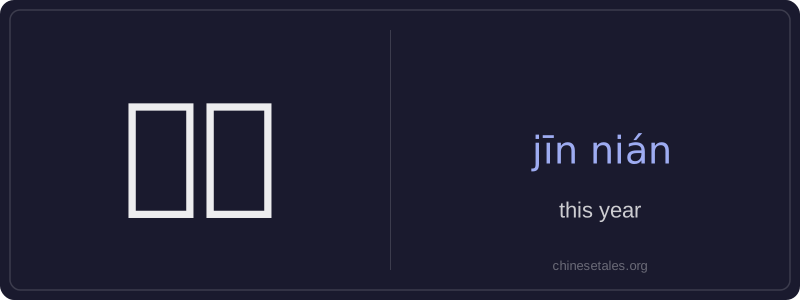
今年 literally means 'this year' and is composed of two characters: 今 (jīn), meaning 'now' or 'present', and 年 (nián), meaning 'year'. Together, they form a time noun that refers specifically to the current calendar year — from January 1 to December 31 of the year in which the speaker is speaking. It functions as a temporal noun and commonly appears at the beginning or end of sentences to set the time frame.
This word is neutral in register and used widely in both spoken and written Chinese — in casual conversations, news reports, formal documents, and personal plans. Unlike some time expressions that require measure words or particles, 今年 stands alone and does not need additional grammatical markers to function as an adverbial time phrase. It contrasts with last year (去年) and next year (明年), forming part of a basic temporal triad learners encounter early.
Example Sentences
Related Words
我的
我的 (wǒ de) is a possessive pronoun meaning 'my'
中国
‘Zhōngguó’ literally means ‘Middle Kingdom’
学校的
'学校的' is a possessive phrase meaning 'school's'
一天
‘一天’ literally combines the numeral ‘一’ (y
在家
'Zài jiā' literally combines the preposition 'z
不要
'不要' (bù yào) is a two-character verb phrase m
这边
这边 (zhè biān) literally combines 这 (zhè, 'th
这么
这么 (zhè me) is an adverb meaning 'so' or 'this