Word Explanation
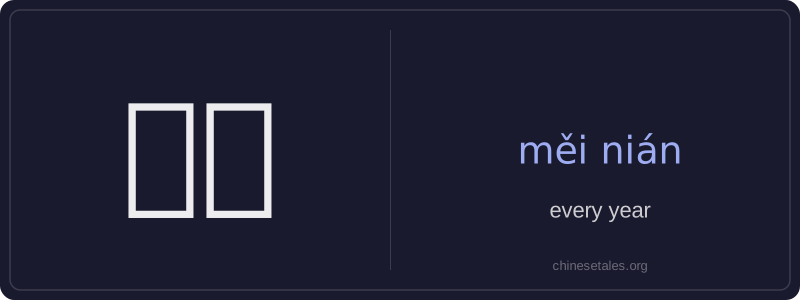
每年 (měi nián) means 'every year' and functions as a time adverb indicating recurring action or state that happens once per calendar year. It is composed of two characters: 每 (měi), meaning 'each' or 'every', and 年 (nián), meaning 'year'. Together, they form a fixed compound expressing regular annual frequency — not a noun phrase, but a temporal modifier that typically appears at the beginning or end of a sentence, or before the verb it modifies.
This term is neutral in register and widely used in both spoken and written Chinese, from casual conversation to formal reports. It commonly appears with verbs like 来 (come), 去 (go), 举办 (hold), 庆祝 (celebrate), or nouns like 假期 (vacation), 会议 (conference), and 考试 (exam). Unlike English, 每年 does not require an article or preposition and cannot be pluralized or modified by degree words like 'very' — it stands alone as a complete temporal expression.
Example Sentences
Related Words
我的
我的 (wǒ de) is a possessive pronoun meaning 'my'
中国
‘Zhōngguó’ literally means ‘Middle Kingdom’
学校的
'学校的' is a possessive phrase meaning 'school's'
一天
‘一天’ literally combines the numeral ‘一’ (y
在家
'Zài jiā' literally combines the preposition 'z
不对
不对 (bù duì) literally combines 不 (bù), meani
不要
'不要' (bù yào) is a two-character verb phrase m
这边
这边 (zhè biān) literally combines 这 (zhè, 'th