Word Explanation
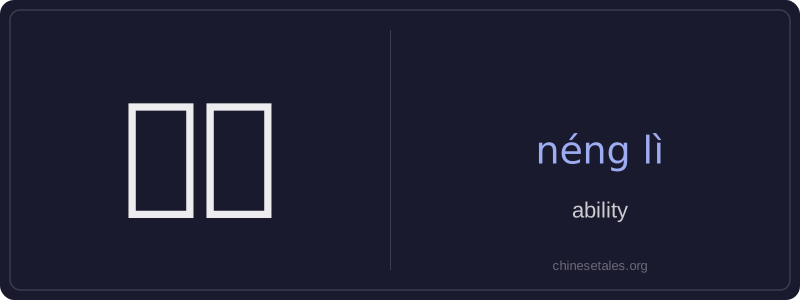
‘能力’ (néng lì) literally combines ‘能’ (néng), meaning ‘to be able to’ or ‘capable’, and ‘力’ (lì), meaning ‘strength’ or ‘power’. Together, they form a noun meaning ‘ability’ — the mental or physical capacity to do something effectively. Unlike English ‘ability’, which often pairs with infinitives (e.g., ‘able to speak’), ‘能力’ functions as a standalone abstract noun and typically appears after measure words like ‘一种’ (yī zhǒng, ‘a kind of’) or modifiers like ‘很强的’ (hěn qiáng de, ‘very strong’).
This word is commonly used in academic, professional, and personal development contexts — for example, when discussing language ability, problem-solving ability, or leadership ability. It emphasizes innate or acquired competence rather than temporary skill or permission. While ‘能力’ can refer to general human capability, it’s rarely used for animals or machines unless anthropomorphizing or in technical descriptions.
Example Sentences
Related Words
我的
我的 (wǒ de) is a possessive pronoun meaning 'my'
中国
‘Zhōngguó’ literally means ‘Middle Kingdom’
不对
不对 (bù duì) literally combines 不 (bù), meani
红色的
红色的 (hóng sè de) is an adjective meaning 'red
学校的
'学校的' is a possessive phrase meaning 'school's'
一天
‘一天’ literally combines the numeral ‘一’ (y
在家
'Zài jiā' literally combines the preposition 'z
不要
'不要' (bù yào) is a two-character verb phrase m