Word Explanation
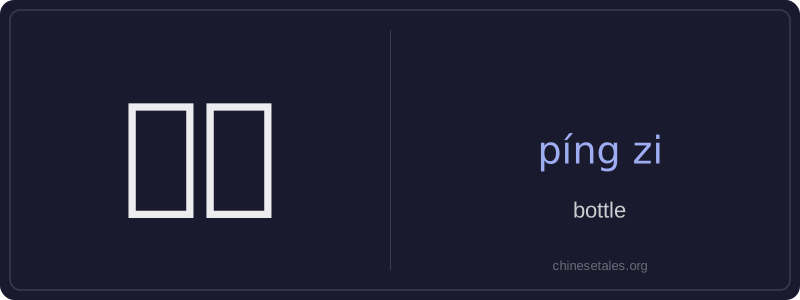
瓶子 (píng zi) is a common noun meaning 'bottle' — a container, typically made of glass, plastic, or metal, used to hold liquids like water, soda, or medicine. The first character 瓶 (píng) carries the core meaning of 'bottle' and appears in related words like 水瓶 (shuǐ píng, 'water bottle') and 酒瓶 (jiǔ píng, 'wine bottle'). The second character 子 (zi) is a diminutive or nominal suffix that turns the root into a concrete, countable noun — it adds no independent meaning here but is essential for natural spoken and written usage.
This word is neutral in register and appears frequently in daily life: shopping, cooking, travel, and health contexts. It’s always countable and used with measure words like 个 (gè) or 只 (zhī), e.g., 一个瓶子 (yī gè píng zi). Unlike English, Chinese doesn’t distinguish 'bottle' as countable vs. uncountable — 瓶子 always refers to a physical object. It’s rarely used metaphorically and almost never appears without the 子 suffix in modern standard Mandarin.
Example Sentences
Related Words
我的
我的 (wǒ de) is a possessive pronoun meaning 'my'
中国
‘Zhōngguó’ literally means ‘Middle Kingdom’
一天
‘一天’ literally combines the numeral ‘一’ (y
不对
不对 (bù duì) literally combines 不 (bù), meani
红色的
红色的 (hóng sè de) is an adjective meaning 'red
学校的
'学校的' is a possessive phrase meaning 'school's'
在家
'Zài jiā' literally combines the preposition 'z
不要
'不要' (bù yào) is a two-character verb phrase m