Word Explanation
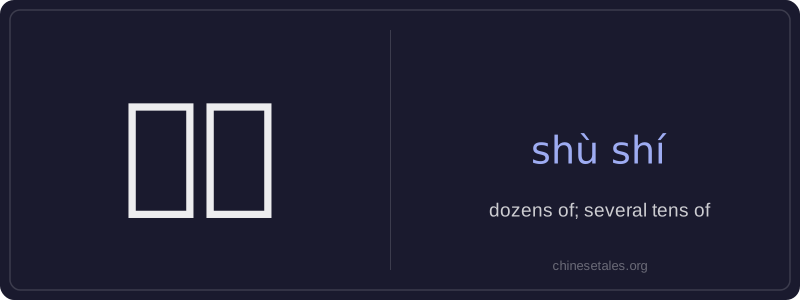
数十 (shù shí) is a numeral phrase meaning 'dozens of' or 'several tens of' — typically indicating an approximate quantity between 20 and 90, without specifying the exact number. It combines 数 (shù), meaning 'number' or 'count', and 十 (shí), meaning 'ten'; together, they literally suggest 'a number of tens'. Unlike precise numerals like 三十 (sān shí, 'thirty'), 数十 conveys vagueness and is often used in formal, descriptive, or narrative contexts to avoid over-specification.
This expression appears frequently in written Chinese — such as news reports, historical accounts, or scientific descriptions — where approximate scale matters more than precision. It functions attributively before nouns (e.g., 数十只鸟, 'dozens of birds') and never stands alone as a subject or object. While it resembles English 'dozens of', it does not imply multiplication (i.e., it doesn’t mean '12 × several'); rather, it’s a compact, idiomatic way to express an indeterminate but sizable quantity in the tens range.
Example Sentences
Related Words
我的
我的 (wǒ de) is a possessive pronoun meaning 'my'
在家
'Zài jiā' literally combines the preposition 'z
不对
不对 (bù duì) literally combines 不 (bù), meani
这边
这边 (zhè biān) literally combines 这 (zhè, 'th
中国
‘Zhōngguó’ literally means ‘Middle Kingdom’
中学
'Zhōngxué' literally combines 'zhōng' (middle)
红色的
红色的 (hóng sè de) is an adjective meaning 'red
一天
‘一天’ literally combines the numeral ‘一’ (y