Word Explanation
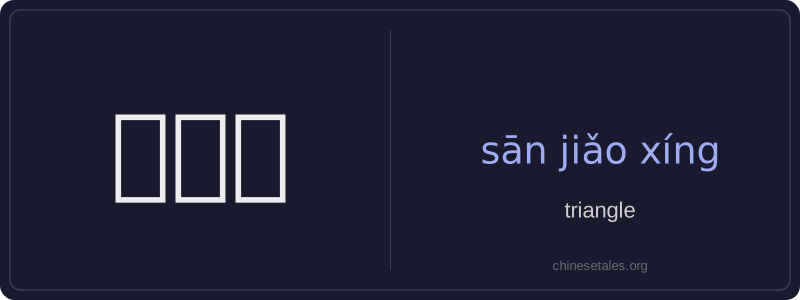
三角形 (sān jiǎo xíng) literally means 'three-corner shape' — composed of 三 (sān, 'three'), 角 (jiǎo, 'corner' or 'angle'), and 形 (xíng, 'shape' or 'form'). It is the standard mathematical and everyday term for a triangle: a closed two-dimensional figure with three straight sides and three interior angles that always sum to 180 degrees. In Chinese, it’s used in geometry lessons, architectural descriptions, design contexts, and even casual comparisons (e.g., 'a triangular piece of land').
The word appears frequently in textbooks, maps, engineering documents, and children’s learning materials. Unlike English, where 'triangle' is rarely modified by classifiers in general use, Chinese often pairs 三角形 with classifiers like 个 (gè) or specific ones like 块 (kuài) for flat objects — e.g., 一块三角形的木板 (a triangular wooden board). Its compound structure makes it easy to remember once learners understand each character’s meaning.
Example Sentences
Related Words
我的
我的 (wǒ de) is a possessive pronoun meaning 'my'
在家
'Zài jiā' literally combines the preposition 'z
不对
不对 (bù duì) literally combines 不 (bù), meani
这边
这边 (zhè biān) literally combines 这 (zhè, 'th
中国
‘Zhōngguó’ literally means ‘Middle Kingdom’
中学
'Zhōngxué' literally combines 'zhōng' (middle)
红色的
红色的 (hóng sè de) is an adjective meaning 'red
一天
‘一天’ literally combines the numeral ‘一’ (y