Word Explanation
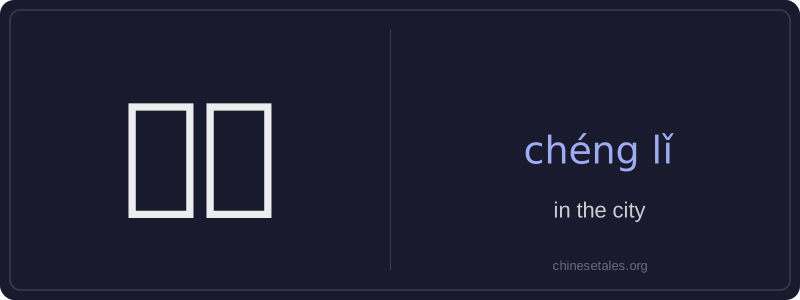
城里 (chéng lǐ) literally combines 城 (chéng), meaning 'city' or 'walled city', and 里 (lǐ), meaning 'inside' or 'within'. Together, it functions as a locative noun or prepositional phrase meaning 'in the city' — specifically referring to the urban center, as opposed to suburbs, countryside, or rural areas. It emphasizes location within the built-up, densely populated core of a city.
This term is commonly used in contrast with terms like 城外 (chéng wài, 'outside the city') or 乡下 (xiāng xia, 'countryside'). While it can refer to any city, context usually makes clear which city is meant — often the speaker’s local city or one previously mentioned. It appears frequently in everyday speech, travel descriptions, and comparisons of urban vs. rural life, and is neutral in register — appropriate for both casual and formal contexts.
Example Sentences
Related Words
我的
我的 (wǒ de) is a possessive pronoun meaning 'my'
在家
'Zài jiā' literally combines the preposition 'z
不对
不对 (bù duì) literally combines 不 (bù), meani
这边
这边 (zhè biān) literally combines 这 (zhè, 'th
中国
‘Zhōngguó’ literally means ‘Middle Kingdom’
中学
'Zhōngxué' literally combines 'zhōng' (middle)
红色的
红色的 (hóng sè de) is an adjective meaning 'red
一天
‘一天’ literally combines the numeral ‘一’ (y